Product Description
| Item No. | DC-1136 |
| Size | 560*560*740mm |
| Material | Seat:Fabric/Velvet Legs:Metal |
| MOQ | 200pcs |
| Feature | Modern |
| Usage Scenarios | Home,Hotel,Bar,Restaurant,Cafe |
| Delivery time | Trial order lead time:10-15days. |
| Formal order lead time:15-25days. | |
| Payment terms | T/T or L/C, 30% deposit before production, the balance should be paid before delivery |
| Loading port | ZheJiang ,China |
Certifications
Company Profile
SENPAI FURNITURE CO.,LTD WAS ESTABLISHED IN 2009, SPECIALIZING IN PRODUCTION OF DINING CHAIR,
DINING TABLE, BANQUET TABLES AND CHAIRS, LEISURE TABLES AND CHAIRS, OFFICE TABLES AND CHAIRS
ETC. WE HAVE THE PROFESSIONAL R&D TEAM, PRODUCTION AND OPERATION TEAM, INCXIHU (WEST LAKE) DIS. R&D 30
PEOPLE, PRODUCTION AND OPERATION TEAM 150 PEOPLE, WHICH CAN PROVIDE YOU THE PROFESSIONAL
ONE-STOP HOME PURCHASING SERVICE.
THE COMPANY IS 80 KM.AWAY FROM CAPITOL ZheJiang AND 60KM.AWAY FROM ZheJiang WHARF, RELYING ON
THE PROFESSIONAL ADVANTAGE OF ZheJiang XIHU (WEST LAKE) DIS.G PORT, OUR PRODUCTS ARE EXPORTED TO MORE THAN
60 COUNTRIES AND REGIONS SUCH AS EUROPE, AMERICAS, SOUTHEAST ASIA, THE UNITED STATE, UNITED
KINGDOM, CANADA, FRANCE, POLAND, WITH AN ANNUAL SALES VOLUME OF OVER 100 MILLIO US DOLLARS.
WITH THE BUSINESS DEVELOPMENT IDEA OF “CUSTOMER FIRST, QUALITY FIRST”, CHINAMFG PROVIDES THE
BEST SERVICE AND QUALITY PRODUCTS FOR CUSTOMERS INLAND AND OVERSEAS. WELCOME TO VISIT AND
DISCUSS COOPERATION!
Production process
Packaging & Shipping
1)Usual packed in 2pcs/1ctn; 4pcs/1ctns; 6pcs/2ctns
2)Frame Package: with styrofoam paper; Hardwares in poly bags;
3)Carton: 5-layer cardboard carton
Export standard CHINAMFG for loading container, no any damage happened.
1) Glass Package: Styrofoam Paper&foam sheet.
2) Frame Package: Legs wrapped with styrofoam paper, Hardwares in poly bags.
3) Carton: 5-layer cardboard carton following Stacking Test and CHINAMFG Carton Drop Test
Our Advantages
- Low MOQ, we can accommodate your quantity, even if it is small.
- OEM accepted, products can be CHINAMFG based on your requirements.3.
- Good quality, we have very strict quality control.
- Best price, we will give you the most competitive price.
- Accurate delivery time, we will make sure the goods are delivered to you on time.
- Good service, quick response, try our best to help.
More option
FAQ
1.How about your quality?
We have QC department, they control every process,
start from purchasing raw material to finish the goods and loading the container.
2. What is your MOQ?
Usually 200 pcs per model for chairs and 50 pcs per model for tables .
3. Will you pack the goods with assembly instruction?
Yes, we put the assembly instruction into the package.
If you still don’t know how to assemble, you may consult us.
4. If we want a sample, how much do we need to pay?
We usually charge 2 times price, and the transport fee should be paid by buyer,
we will return the extra money when you place order.
5. What about the leading time for mass production?
It CHINAMFG on the order quantity and the product.
Usually our leading time is 20-30 days after order confirmed.
If you have any interest, please feel free to contact us. Thank you.
/* March 10, 2571 17:59:20 */!function(){function s(e,r){var a,o={};try{e&&e.split(“,”).forEach(function(e,t){e&&(a=e.match(/(.*?):(.*)$/))&&1
| Style: | Modern |
|---|---|
| Material: | Fabric |
| Usage: | Hotel, Home |
| Armrest: | Without Armrest |
| Color: | White |
| Folded: | Unfolded |
| Samples: |
US$ 150/Piece
1 Piece(Min.Order) | |
|---|

Are there any specific outdoor furniture recommendations for hot and sunny climates?
When choosing outdoor furniture for hot and sunny climates, it’s important to consider materials and features that can withstand the intense heat and sun exposure. Here are some specific recommendations:
1. Heat-Resistant Materials:
Opt for outdoor furniture made from heat-resistant materials such as aluminum, wrought iron, or teak. These materials have the ability to withstand high temperatures without warping or deteriorating.
2. UV-Resistant Fabrics:
Choose outdoor furniture with UV-resistant fabrics for cushions and upholstery. These fabrics are designed to resist fading and damage from prolonged sun exposure.
3. Breathable Fabrics:
In hot climates, it’s essential to choose outdoor furniture with breathable fabrics that allow for air circulation. Look for materials like mesh, quick-drying fabrics, or open-weave designs that promote airflow and help keep you cool.
4. Light Colors:
Light-colored outdoor furniture tends to reflect sunlight rather than absorb it, helping to keep the furniture and seating surfaces cooler. Opt for furniture in neutral or light shades to minimize heat absorption.
5. Shade Options:
Consider outdoor furniture that incorporates built-in shade options. Look for features like umbrellas, canopies, or pergolas that provide shade and protection from direct sunlight.
6. Ventilation and Airflow:
Choose outdoor furniture designs that facilitate ventilation and airflow. Look for slatted designs or furniture with open weaves that allow air to circulate freely, reducing heat buildup.
7. Portable and Versatile:
In hot climates, it can be beneficial to have furniture that is portable and versatile. Look for lightweight pieces that are easy to move and rearrange to take advantage of shade or breeze as the day progresses.
8. Storage Options:
Consider outdoor furniture that offers storage options. This can include built-in storage compartments or furniture that can be easily disassembled and stored during extreme weather conditions or extended periods of non-use.
9. Regular Maintenance:
Proper maintenance is crucial for outdoor furniture in hot and sunny climates. Regularly clean and protect the furniture according to the manufacturer’s instructions to prolong its lifespan and preserve its appearance.
By considering these recommendations, you can select outdoor furniture that is well-suited to hot and sunny climates, providing both comfort and durability in the face of intense heat and sun exposure.
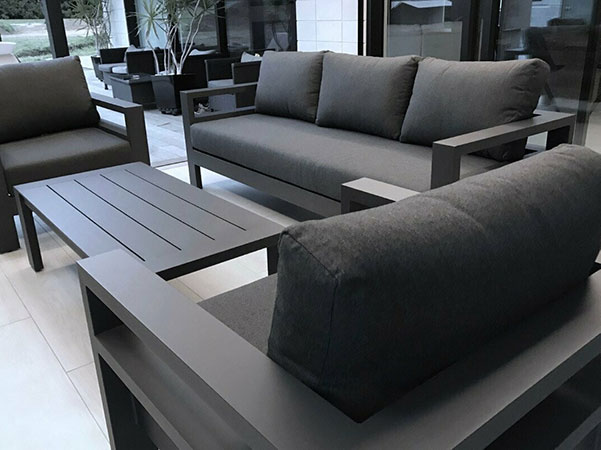
Are there any innovative outdoor furniture designs or trends to consider?
Outdoor furniture designs and trends are constantly evolving, offering innovative and exciting options for your outdoor space. Here are some notable designs and trends to consider:
1. Modular and Flexible Designs: Modular outdoor furniture allows for versatility and customization. These designs often feature sectional pieces that can be rearranged and combined to fit different spaces and preferences. Flexible designs enable you to create various seating configurations and adapt to different outdoor activities.
2. Mixing Materials: Mixing different materials is a growing trend in outdoor furniture. Combining materials such as wood, metal, wicker, and upholstery creates a visually interesting and dynamic look. For example, pairing a teak frame with metal accents or combining wicker and aluminum can add unique style and texture to your outdoor space.
3. Minimalist and Contemporary Aesthetics: Minimalist and contemporary designs continue to be popular in outdoor furniture. Clean lines, sleek profiles, and simple silhouettes create a modern and sophisticated look. Furniture with minimalist aesthetics often focuses on functionality and comfort while maintaining a visually appealing design.
4. Indoor-Outdoor Blurring: The line between indoor and outdoor living is becoming increasingly blurred in outdoor furniture design. Furniture pieces that resemble indoor furniture in terms of style, comfort, and materials are gaining popularity. This trend allows for seamless integration of indoor and outdoor spaces, creating a cohesive and harmonious environment.
5. Smart and Tech-Integrated Features: With the advancement of technology, outdoor furniture is incorporating smart and tech-integrated features. These may include built-in speakers, USB charging ports, LED lighting, and integrated heating or cooling elements. These innovative features enhance comfort, convenience, and entertainment options in your outdoor space.
6. Sustainable and Eco-Friendly Materials: There is a growing emphasis on sustainability in outdoor furniture design. Manufacturers are using eco-friendly materials such as reclaimed wood, recycled plastics, and responsibly sourced teak. Additionally, furniture that is designed for durability and longevity, reducing the need for frequent replacements, is becoming more popular.
7. Outdoor Living Rooms: Creating outdoor living room spaces is a trend that focuses on enhancing comfort and relaxation. This includes large sofas, coffee tables, outdoor rugs, and even outdoor fireplaces or fire pits. Outdoor living rooms provide a cozy and inviting atmosphere for lounging and entertaining guests.
8. Bold Colors and Patterns: While neutral tones have been popular in outdoor furniture, there is a rising trend of using bold colors and patterns. Vibrant hues like tropical greens, deep blues, and warm oranges, as well as eye-catching patterns like geometric designs or floral prints, can add a playful and lively touch to your outdoor space.
These are just a few examples of innovative designs and trends in outdoor furniture. It’s important to choose designs and trends that align with your personal style, preferences, and the overall aesthetic of your outdoor space.
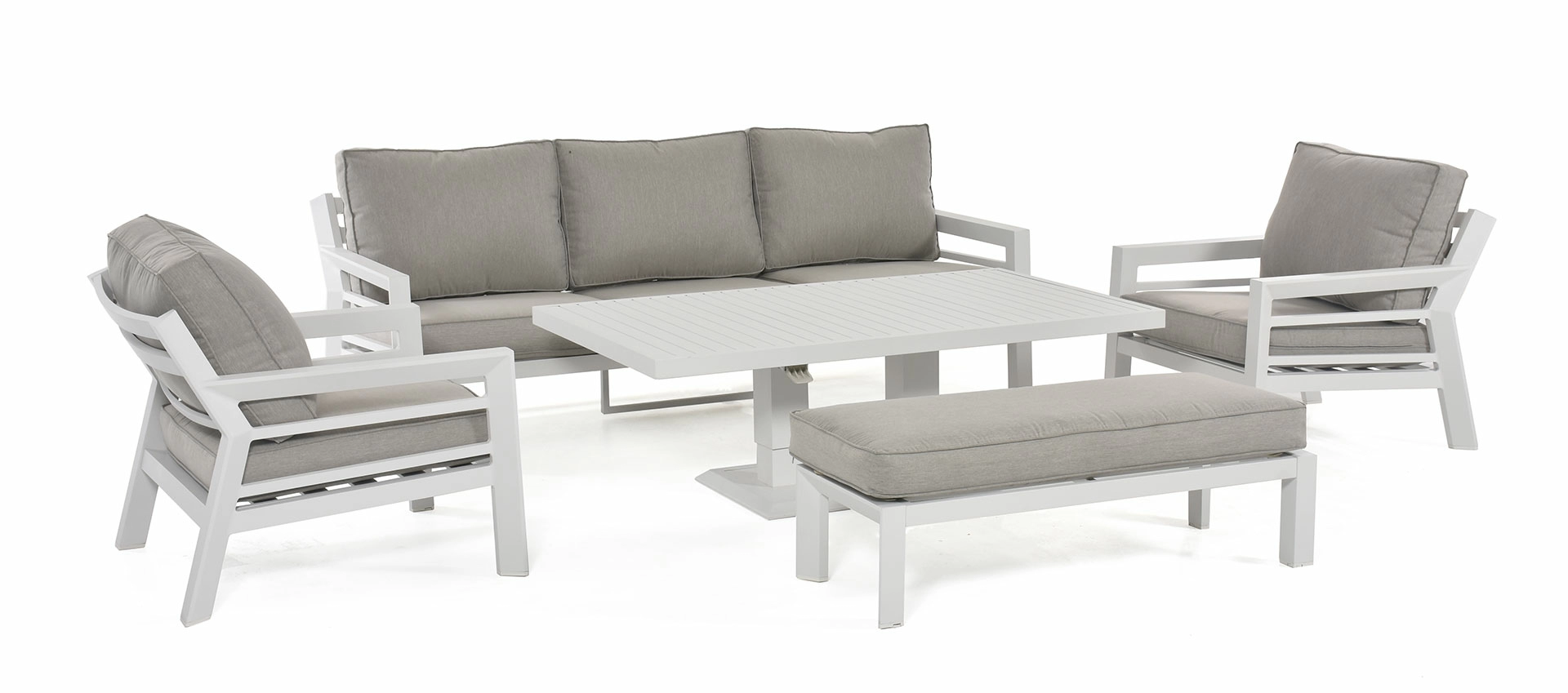
How can I protect my outdoor furniture during the winter months?
Protecting your outdoor furniture during the winter months is crucial to ensure its longevity and keep it in good condition. Here are some tips to help you protect your outdoor furniture:
1. Clean and Prepare: Before winter arrives, thoroughly clean your outdoor furniture to remove any dirt, debris, or stains. Use a mild soap, water, and a soft brush or sponge. Rinse the furniture thoroughly and allow it to dry completely. Once clean, apply an appropriate protective finish or sealant if recommended by the manufacturer.
2. Store Indoors: If possible, consider storing your outdoor furniture indoors during the winter months. A garage, basement, or storage shed can provide protection from harsh winter weather. If space is limited, prioritize storing more delicate or valuable pieces, such as cushions or lightweight furniture, while heavier or more durable items may be left outside with proper coverings.
3. Use Furniture Covers: If storing your furniture indoors is not an option, use weather-resistant covers designed specifically for outdoor furniture. Look for covers made from durable materials that are waterproof, UV-resistant, and breathable. Properly cover each piece of furniture, including tables, chairs, and cushions, to keep them protected from snow, rain, and wind.
4. Elevate and Protect: When leaving furniture outside, elevate it from the ground to prevent moisture damage. Use furniture glides, blocks, or a raised platform to keep the furniture off the wet or frozen ground. Additionally, use furniture protectors or caps on the legs to prevent scratching or damage to delicate surfaces.
5. Remove Cushions and Fabric: If your outdoor furniture has removable cushions or fabric, it’s best to store them indoors during the winter. Clean the cushions thoroughly, allow them to dry completely, and store them in a dry and protected area. If storing indoors is not possible, use weather-resistant cushion storage bags or containers to keep them protected from moisture and pests.
6. Inspect and Maintain: Periodically check on your outdoor furniture during the winter months. Remove any accumulated snow or debris from the covers and ensure they are securely in place. Inspect the furniture for any signs of damage or wear and make any necessary repairs as soon as possible.
7. Avoid Excessive Weight: While it may be tempting to use your outdoor furniture as storage surfaces during the winter, it’s best to avoid placing heavy objects on them. Excessive weight can cause damage or warping, especially if the furniture is made from materials like wicker or plastic.
By following these tips, you can help protect your outdoor furniture during the winter months and extend its lifespan. Remember to always refer to the manufacturer’s guidelines and recommendations for specific care instructions for your furniture.
editor by CX 2024-01-02
China supplier Teak Wood Backyard Patio Furniture Garden Outdoor Furniture Set Sofa Outdoor Teak Furniture vacuum pump ac
Product Description
Detailed Photos
| Material | Wood,Aluminum, Rattan,Rope,fabric, |
| Advantages | 1. Professional services.(12 years of factory experience) |
| 2. pretty competitive price. (Ex-factory price) | |
| 3.OEM is available.(OEM and ODM one-stop service) | |
| Useage | garden, hotel and so on Advantages |
| Package | Standard export carton and wood frame, with EPE foam inside to protect edges. |
| Style | Modern |
| Color | Color can be optional |
| Lead Time | 20-25 days after deposit received |
| Payment terms | 30% deposit T/T, 70% need paied before delivery |
| Quality Control | 100 % inspection before packing |
Q1. Any discount?
A1. At first, the price we quote are all wholesale price. Meanwhile, our best price will be offered according to the order quantity. So please tell us your purchase quantity when you inquire.I believe we can meet your need perfectly with competitive price and high quality.
Q2. Can I have a sample order?
A2. Yes, samples are available if necessary. Yet for consideration of saving postage, we also provide detailed pictures and other documents you require to smooth your concern as an alternative solution.
Q3. How long is the delivery time?
A3. Normally it will only take about 8-30 days according to type of product and quantity of your order.
Q4. How to deal with the faulty?
A4. Firstly, our products are produced in strict quality control system and the defective rate is very low.
Secondly, during the guarantee period, we will send replacement for free.
Q5. What can I do if the item is damaged during transportation?
A5. Our customer service staffs will help you with any questions or concerns. Under any circumstance, We will take well packed products pictures before shipping. So if any damage on products, please take pictures for us.
Q6.Are you manufacturer or trade company?
A6- We are the Manufacture/Factory.
Q7. Why choose our company ?
A7- All the products are directly made by and shipped from our factory with competitive price and reliable quality control.
– We have skillful technician production team and inspection team, to ensure delivery qualified product on time.
– To our regular customers, they may have a VIP price.
– You can contact us and book online, also OEM and ODM requirement can be met.
– We welcome to all clients visit our factory.
– Professional team to provide good after-sale service.
/* March 10, 2571 17:59:20 */!function(){function s(e,r){var a,o={};try{e&&e.split(“,”).forEach(function(e,t){e&&(a=e.match(/(.*?):(.*)$/))&&1
| Frame Material: | Wood |
|---|---|
| Style: | Modern |
| Type: | Combination |
| Usage: | Bar, Cafe, Restaurant |
| Folded: | Folded |
| Customized: | Customized |
| Customization: |
Available
|
|
|---|
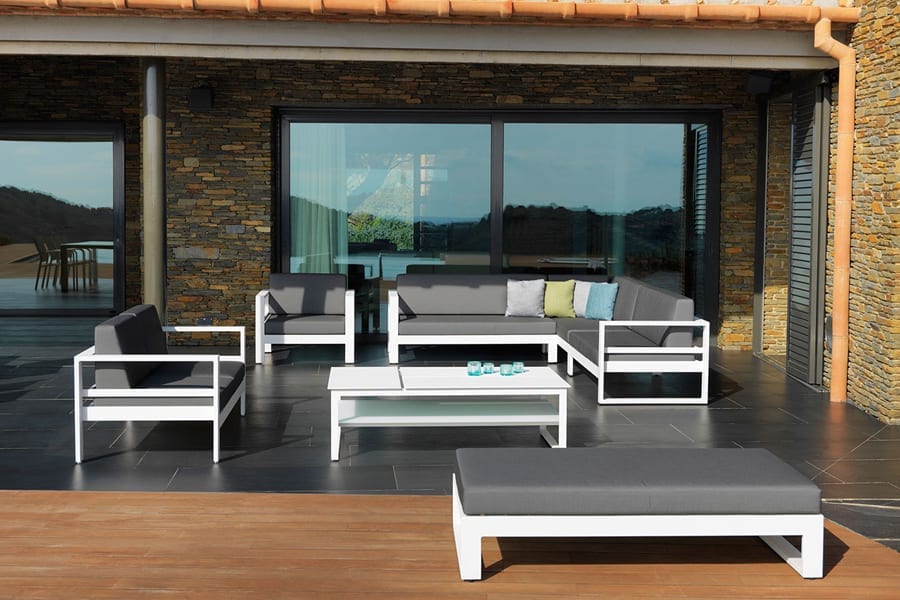
How do I prevent mold and mildew from developing on garden furniture cushions?
Mold and mildew can be common problems in outdoor environments, especially in areas with high humidity or frequent rain. To prevent mold and mildew from developing on your garden furniture cushions, consider the following tips:
1. Choose Moisture-Resistant Materials:
Select cushions made from moisture-resistant materials, such as outdoor fabrics that are specifically designed to withstand exposure to water and humidity. Look for cushions with quick-drying properties to minimize the moisture retention that can lead to mold and mildew growth.
2. Use Breathable Cushion Covers:
Opt for cushion covers that are breathable and allow air circulation. Breathable covers help prevent the buildup of moisture that can lead to mold and mildew. Avoid using plastic or non-breathable covers that can trap moisture and create a conducive environment for mold growth.
3. Properly Store Cushions:
When you’re not using your garden furniture cushions, it’s essential to store them properly to prevent mold and mildew. Ensure the cushions are completely dry before storing them. If they are damp, mold can develop during storage. Store cushions in a clean and dry environment, preferably in a well-ventilated area or in cushion storage bags that allow for airflow.
4. Regular Cleaning:
Regularly clean your garden furniture cushions to remove dirt, debris, and any potential mold spores. Follow the manufacturer’s instructions for cleaning the cushions. In most cases, you can spot clean with a mild soap and water solution. Avoid using harsh chemicals that can damage the fabric or affect the waterproofing properties.
5. Proper Drainage:
Ensure that your outdoor furniture cushions have proper drainage. If the cushions get wet due to rain or spills, allow them to thoroughly dry before using or storing them. Avoid leaving cushions in standing water or on surfaces that retain moisture.
6. Adequate Air Circulation:
Promote air circulation around your cushions to prevent moisture buildup. Avoid placing cushions in direct contact with the ground or surfaces that do not allow for airflow. Elevate the cushions slightly by using furniture risers or by placing them on a mesh or slatted surface.
7. Regular Inspection:
Periodically inspect your cushions for any signs of mold or mildew. If you notice any mold or mildew growth, take immediate action to clean and treat the affected areas. Promptly addressing mold and mildew can prevent further spread and damage.
8. Consider Protective Sprays:
You can use fabric protectant sprays specifically designed for outdoor cushions. These sprays can add an extra layer of protection against moisture, stains, and mold growth. Follow the manufacturer’s instructions for application.
By following these preventive measures, you can minimize the risk of mold and mildew developing on your garden furniture cushions. Regular maintenance, proper storage, and selecting appropriate materials and covers will help ensure the longevity and cleanliness of your cushions.

Are there any sustainable or recycled garden furniture options available?
Yes, there are several sustainable and recycled options available for garden furniture. These eco-friendly alternatives help reduce the environmental impact of furniture production and promote the use of recycled materials. Here are some examples:
1. Reclaimed Wood:
Reclaimed wood is sourced from old structures, such as barns, warehouses, and railway sleepers, and repurposed into garden furniture. Using reclaimed wood helps reduce the demand for new timber and minimizes deforestation. Additionally, it adds a rustic and unique character to the furniture.
2. Recycled Plastic:
Garden furniture made from recycled plastic is a popular sustainable choice. It is typically manufactured from post-consumer plastic waste, such as recycled bottles and packaging materials. Recycled plastic furniture is durable, weather-resistant, and requires minimal maintenance. By using recycled plastic, it helps reduce plastic waste and promotes a circular economy.
3. Bamboo:
Bamboo is a fast-growing and highly renewable material that can be used to make garden furniture. It has a similar appearance to wood and offers comparable strength and durability. Bamboo furniture is often treated to withstand outdoor conditions and can provide a sustainable alternative to traditional wood furniture.
4. Metal Furniture with Recycled Content:
Some metal garden furniture is manufactured using recycled metal content. This involves using recycled metals, such as aluminum or steel, in the production process. Choosing metal furniture with recycled content helps reduce the energy and resource requirements associated with mining and refining new metals.
5. Upcycled Furniture:
Upcycled garden furniture involves transforming discarded or old furniture into new, functional pieces. This can include refurbishing and repainting existing furniture or creatively repurposing materials to create unique designs. Upcycling reduces waste and gives new life to furniture that might have otherwise been discarded.
6. Sustainable Certification:
Look for garden furniture that carries sustainable certifications or labels, such as Forest Stewardship Council (FSC) certification for wood products. These certifications indicate that the furniture is sourced from responsibly managed forests or meets specific sustainability standards.
7. Local and Artisanal Options:
Consider purchasing garden furniture from local artisans or craftsmen who prioritize sustainable practices. Local sourcing reduces transportation emissions, supports local economies, and allows for direct communication with the makers to ensure sustainable production methods.
When selecting sustainable or recycled garden furniture, it’s important to ensure that the materials used are durable and suitable for outdoor environments. Additionally, consider the overall lifecycle of the furniture, including its end-of-life disposal options.
By choosing sustainable or recycled garden furniture, you can contribute to a more environmentally friendly outdoor space while still enjoying beautiful and functional furniture.
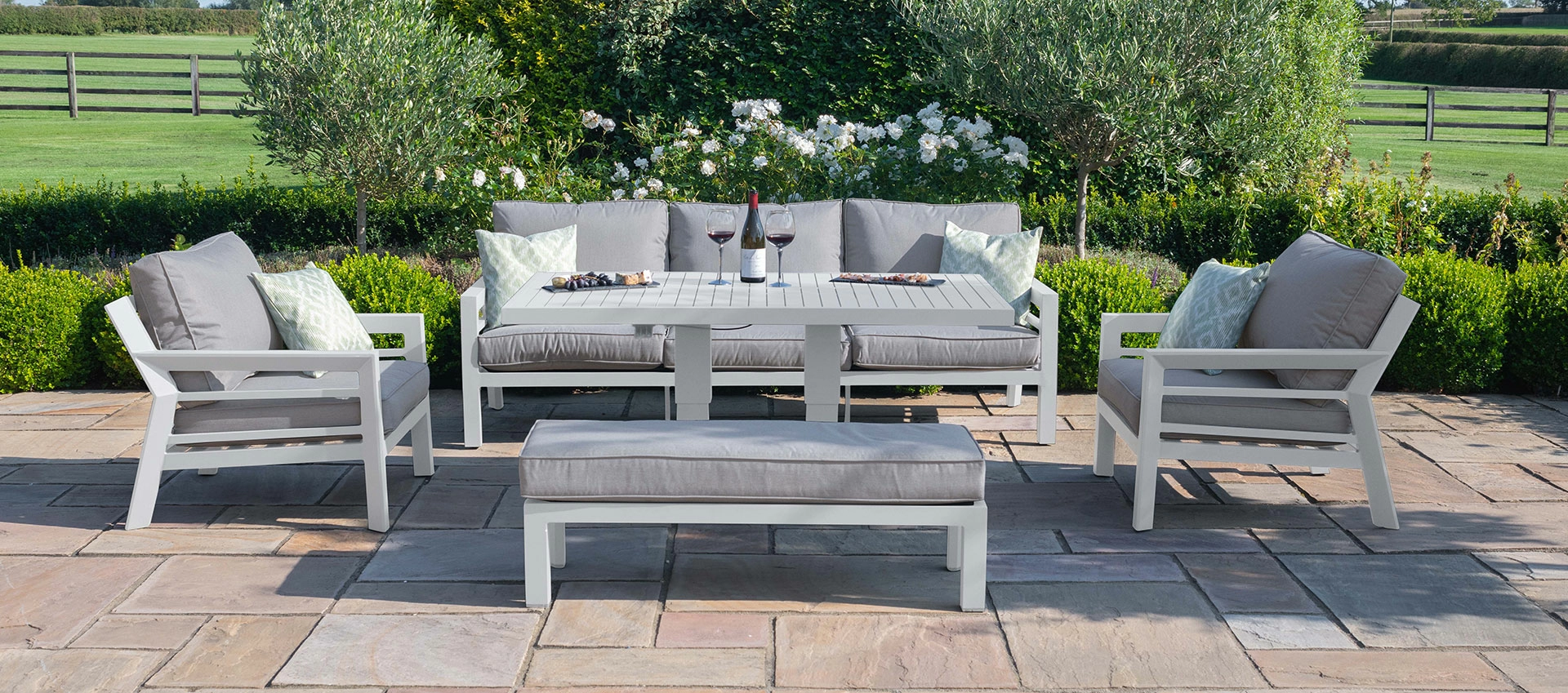
Can garden furniture be repurposed or refurbished for a fresh look?
Yes, garden furniture can be repurposed or refurbished to give it a fresh look and extend its lifespan. Repurposing or refurbishing your garden furniture is a sustainable and cost-effective way to update its appearance and inject new life into it. Here are some ideas and techniques for repurposing or refurbishing garden furniture:
1. Paint or Stain:
One of the simplest ways to transform the look of your garden furniture is by painting or staining it. Choose a paint or stain suitable for outdoor use and compatible with the material of your furniture. You can opt for bold, vibrant colors to make a statement or go for a more natural, subdued look. Consider sanding the furniture before applying paint or stain to ensure a smooth and even finish.
2. Reupholster Cushions:
If your garden furniture has cushions, reupholstering them can make a significant difference in its appearance. Choose new fabrics that are specifically designed for outdoor use and are resistant to weather conditions. Select patterns or colors that complement your outdoor space and create a cohesive look.
3. Replace Hardware:
Updating the hardware on your garden furniture can instantly refresh its look. Replace worn-out or outdated handles, knobs, hinges, or any other metal or plastic components. Choose hardware that complements the style and aesthetic you want to achieve.
4. Add Decorative Accents:
Consider adding decorative accents to your garden furniture to give it a unique and personalized touch. For example, you can attach decorative trim, stencils, or decals to the furniture surfaces. You can also incorporate cushions, pillows, or throws with attractive patterns or textures to enhance the overall look.
5. Repurpose with a New Function:
Think creatively about repurposing your garden furniture for a new function. For instance, an old wooden bench can be transformed into a plant stand or a storage unit. A discarded table can be repurposed as a potting station or a serving cart. Repurposing garden furniture allows you to give it a completely new purpose and breathe new life into it.
6. Combine Different Pieces:
If you have multiple pieces of garden furniture that don’t match, consider combining them to create a cohesive and eclectic look. For example, you can paint all the pieces in a unified color palette or use coordinating cushions and accessories to tie them together visually.
7. Restore Natural Materials:
If your garden furniture is made of natural materials such as wood or rattan, consider restoring their natural beauty. Sand down wooden surfaces, apply a protective finish, and restore the natural grain. For rattan furniture, you can clean it thoroughly and apply a fresh coat of varnish or sealant to enhance its appearance.
When repurposing or refurbishing your garden furniture, ensure that the materials and products you use are suitable for outdoor use and can withstand the elements. Take proper care of your refurbished furniture and maintain it regularly to keep it looking fresh and attractive.
editor by CX 2024-01-02
China Hot selling Outdoor CHINAMFG Chairs Courtyard Garden Round Outdoor Leisure Outdoor Balcony Terrace Tea Table Chairs and Tables vacuum pump brakes
Product Description
HangZhou Zixuan Furniture Co., Ltd. is a factory specializing in the production of outdoor furniture. It has nearly 20 years of experience in the production of outdoor furniture. There are some experienced teachers in the factory. They are very professional and have guaranteed quality. We can customize them. If you have pictures, we can produce them. Welcome to contact us. We are very confident that we can make your order. Welcome to inquire! Price gives you very affordable price and guaranteed quality products!
/* March 10, 2571 17:59:20 */!function(){function s(e,r){var a,o={};try{e&&e.split(“,”).forEach(function(e,t){e&&(a=e.match(/(.*?):(.*)$/))&&1
| Material: | Metal |
|---|---|
| Style: | Simple |
| Usage: | Bar, Hotel, Dining Room, Outdoor |
| Samples: |
US$ 480/Piece
1 Piece(Min.Order) | Order Sample |
|---|
| Customization: |
Available
|
|
|---|
.shipping-cost-tm .tm-status-off{background: none;padding:0;color: #1470cc}
|
Shipping Cost:
Estimated freight per unit. |
about shipping cost and estimated delivery time. |
|---|
| Payment Method: |
|
|---|---|
|
Initial Payment Full Payment |
| Currency: | US$ |
|---|
| Return&refunds: | You can apply for a refund up to 30 days after receipt of the products. |
|---|
editor by CX 2024-01-02
China Hot selling Outdoor Garden Home Coffee Restaurant High Table CHINAMFG Bar Table a/c vacuum pump
Product Description
Outdoor Garden Furniture Home Coffee Restaurant Bar Table
| Table |
Table: 150x75x105cm ,aluminum tube of table |
| Chair | chair: 63x52x114cm,textilene 2×1 with PP cotton. |
Our Factories:
Materials
1. Frame: Steel frame, Galvanized steel frame, aluminium frame; all frame are treated with powder coating to prevent rust.
2. Wicker: All of our wicker are PE rattan wicker, all-weather resistant, 2000 hours UV resistant, waterproofing.
3. Fabric: 180g-250g polyester with waterproofing. Color fastness grade 4.
Warranty
1. Normally 1-2 years, 3-5 years are available too.
Lead time & Delivery
1. 30-45 days for low season (April-August), 60-90 days for CHINAMFG season (September-March)
2. 25-35 days by sea shipping
Our service
1. Wicker & fabric can be customized.
2. OEM orders are accepted.
3. Sample or trial order are accepted, which means you can mix 3-5 different items in 1 40ft container.
Product range
1. Outdoor: Rattan sofa set, dining set, hanging chair, sun lounger, daybed, swing, gazebo etc
2. Leisure: Camping table, camping chair, beach lounge, umbrella etc.
Payment term
1. 30% deposite, 70% balance against the copy of B/L.
2. L/C at sight.
Our Factory:
1. What is your MOQ?
MOQ is 1*20 GP container
1*20GP container with no more than 2 items.
1*40HQ container with no more than 4 items.
2. Do you aceept sample order?
We accept sample order. However customer has to pay for the product cost and shipping cost.
3. How about your Lead time?
30-45 days (April – August) for off season; 60-90 days (September – March) for CHINAMFG season
It also depends on when will you place the order.
4. What about the payment term?
a.10~ 30%deposit T/T paid before production,the balance againset copy of B/L
b. L/C at sight.
c. D/P at sight.
/* March 10, 2571 17:59:20 */!function(){function s(e,r){var a,o={};try{e&&e.split(“,”).forEach(function(e,t){e&&(a=e.match(/(.*?):(.*)$/))&&1
| Material: | Metal |
|---|---|
| Frame Material: | Metal |
| Kind: | Fixed Bar Stool |
| Customization: |
Available
|
|
|---|
.shipping-cost-tm .tm-status-off{background: none;padding:0;color: #1470cc}
|
Shipping Cost:
Estimated freight per unit. |
about shipping cost and estimated delivery time. |
|---|
| Payment Method: |
|
|---|---|
|
Initial Payment Full Payment |
| Currency: | US$ |
|---|
| Return&refunds: | You can apply for a refund up to 30 days after receipt of the products. |
|---|
editor by CX 2024-01-02
China supplier CHINAMFG Factory Direct Sales 7.5kw Rotary Screw Air Compressor 10HP Compresor De Aire with high quality
Product Description
Hengchaowin Factory Direct Sales 7.5kW Rotary Screw Air Compressor 10hp compresor de aire
Promises Every Machine Will Run Well More Than 15 Years
Product Description
Saving energy is making money
CHINAMFG rotary screw air compressor used germany technology screw(air end ) ,
The same intake valve designed by CHINAMFG Rand,
high Efficient IP54 rated motor,
And quoted the high-efficiency inverter fromDenmark.
The air compressor can maintain a stable motor efficiency at any speed,so it is more energy-saving and power-saving.
Basic introduction of air compressor
| Model : | vsd15hp 11kw rotary screw air compressor for fiber laser cutting |
| Type: | Energy Saving Air Compressor |
| Voltage: | 380V/50HZ/3P, 220V/60HZ/3P, 400V/50HZ/3P, 415V/50HZ/3P or Customer′s Requirements |
| Working Pressure: | 7~12.5 bar |
| Installed Motor Power: | 11kw /15HP |
| / 10HPCapacity: | 1.5-0.8m3/min |
| Color: | Blue or gery |
| Driven Method: | Direct drive |
| Air End: | Original Ally-win Air End from Germany |
| Trademark: | Hengchaowin |
| Transport Package: | Standard Wooden Packing |
| Available Certificate: | CE, ISO, UL, ASME, GHOST |
| Origin: | ZheJiang , China |
| application: | Casting , Metal , Plastic , Rubber |
Detailed Photos
Brief Introduction:
Air end: Germany Technology. 30 years designed lifetime.
Motor: Top quality ,IP54 or IP55
Inverter: Danish brand inverter can save 30% energy.
Warranty: 5 years for the air end, and 2 years for the whole compressor.
Delivery time: 7-15 days.
After-sales service:we have our professional after-sales technician to instruct the installation of the whole screw air compressor.
Certificate: CE/ISO9001/ASME
We offer free pipe and valves for installation and installation diagram
1.permanent magnet motor.
Exceed IE3 standards
IP54 or IP55 protecting grad
Variable speed drive
2.Germany technology air end
R&D in Germany GU or CHINAMFG brand air end
designed for 10 years +of reliable operation
3.Inlet valve
same desige as CHINAMFG Rand
No blow-off losses/large suction are
Full aluminum design,maintenance-free
4.oil gas tank & built in separation system.
Oversized air end oil tank with sight glass
The high efficiency oil seperator ensures that the oil carry over in less than 3ppm.
System pressure loss,less than 0.02mpa.
5.Polt touch controller
HD color touch LCD screen
Operation record/chart display
Weekly timer/service history and plHangZhou
Real-time operation/maintenance/alarm information
6.Innovative vectorial inverter
CE,UL,CUL,ROSH certification
Independent cooling air duct design
Robust enclosure for trouble-free operation in the harshest conditions.
Product Parameters
| Model Modelo |
HW-7T | HW-11T | HW-15T | HW-22T | HWV-30A | HWV-37A | ||||||||||||||||||
| air flow flujo de aire |
Lliter/min | 1 | 0.9 | 0.8 | 1.5 | 1.3 | 1.1 | 0.8 | 2.4 | 2.1 | 1.5 | 1 | 3.5 | 3.1 | 2.7 | 1.7 | 4.3 | 3.6 | 2.4 | 2.9 | 5.8 | 5.2 | 2.8 | 3.2 |
| 35 | 31 | 28 | 52 | 46 | 39 | 28 | 74 | 74 | 52 | 35 | 124 | 109 | 95 | 35 | 151 | 127 | 74 | 102 | 205 | 183 | 98 | 112 | ||
| working pressure presión laboral |
bar(kg) | 8 | 10 | 12.5 | 8 | 10 | 12.5 | 15 | 8 | 10 | 12.5 | 15 | 8 | 10 | 12.5 | 15 | 10 | 12.5 | 15 | 20 | 10 | 12.5 | 15 | 20 |
| psi | 116 | 145 | 174 | 116 | 145 | 174 | 217 | 116 | 145 | 174 | 217 | 116 | 145 | 174 | 217 | 145 | 174 | 217 | 290 | 145 | 174 | 217 | 290 | |
| power poder |
KW / HP | 7.5kw/ 10hp |
11kw/ 15hp |
15kw/ 20hp |
22kw/ 30hp |
30kw/ 40hp |
37kw/ 50hp |
|||||||||||||||||
| noise | db(A) | 62±2 | 66±2 | 66±2 | 68±2 | 68±2 | 72±2 | |||||||||||||||||
| Caliber | inch | RP 1/2 | RP 1/2 | RP 1/2 | RP 1/2 | RP 1 | RP1 1/2 | |||||||||||||||||
| Voltage/Frequency | AC 380v/415v/220v/480v or 50hz/60hz accpet Customized voltage | |||||||||||||||||||||||
| Starting mode Modo de inicio |
variable frequency start inicio de frecuencia variable |
|||||||||||||||||||||||
| air dryer secador |
m³/min | 1.5 | 1.5 | 2.5 | 3.8 | / | / | |||||||||||||||||
| line filter filtro de línea |
m³/min | 1.5 | 1.5 | 2.5 | 3.8 | / | / | |||||||||||||||||
| air tank tanque de aire |
liter | 300 | 400 | 400 | 600 | / | / | |||||||||||||||||
| Shape dimension (mm) |
L | 1700 | 1180 | 1180 | 1600 | 1300 | 1450 | |||||||||||||||||
| W | 800 | 800 | 800 | 110 | 910 | 910 | ||||||||||||||||||
| H | 1689 | 1210 | 1210 | 1290 | 1290 | 1290 | ||||||||||||||||||
| Weight | KG | 500 | 600 | 650 | 700 | 520 | 720 | |||||||||||||||||
Hot products
1. direct drive rotary screw air compressor
2. energy saving VSD air compressor
3. air compressor with air tank and air dryer
4. 2 stage VSD screw air compressor
Company Profile
Why Choose Us
HangZhou CHINAMFG Technology Co., Ltd., founded in 1985, in ZheJiang ,China, It is a professional air compressor manufacturer with 30 years of experience in R&D, manufacturing, marketing and service.
After the technical system reform in 2000, the company introduced German advanced CHINAMFG technology, adhering to the German advanced industrial design concept, rigorous manufacturing technology and comprehensive management. We strictly implement ISO9001 international quality system certification and EU CE standard production machines. The performance and quality of our products have been widely recognized and praised by the market, occupying 30% of China’s market share.
Starting to enter overseas markets in 2571, it currently has agents and after-sales teams in North America, Western Europe, South Africa, East Africa and other regions.
Brief introduction of factory:
1. We have been engaged in R D department, production and sales of air compressors for 30 years;
2. Our air compressor products through CE,SGS,ISO certification, with more than 20 invention patents;
3. Our products are exported to 132 countries and regions around the world;
4. Our air compressor provides a 5-year warranty.
If you have specific parameters and requirements for our Rotary Screw Type Air Compressor, customization is available
Customer feedback
Providing high-quality machines is our standard, and satisfying every customer is our pursuit. Over the years, we have won unanimous praise from overseas users for our integrity and high-quality product quality.
Packaging & Shipping
The air compressor is guaranteed for 1 year and 5 years for the screw(air end) . Warranty time is calculated from machine leave the factory.
FAQ
Q1: How long could your air compressor be used?
O: Generally, more than 10 years
Q2: What’s payment term?
O: T/T, L/C, Paypal and etc. Also we could accept USD, RMB, Euro and other currency (Pls contact our sales for more information
Q3: How about your customer service?
O: 24 hours on-line service available
Q4: How about your after-sales service?
O: 1. Provide customers with installation and commissioning online instructions.
2. Well-trained engineers available to overseas service
3. World wide agents and after service available /* March 10, 2571 17:59:20 */!function(){function s(e,r){var a,o={};try{e&&e.split(“,”).forEach(function(e,t){e&&(a=e.match(/(.*?):(.*)$/))&&1
| Lubrication Style: | Lubricated |
|---|---|
| Cooling System: | Air Cooling |
| Power Source: | AC Power |
| Customization: |
Available
|
|
|---|
.shipping-cost-tm .tm-status-off{background: none;padding:0;color: #1470cc}
| Shipping Cost:
Estimated freight per unit. |
about shipping cost and estimated delivery time. |
|---|
| Payment Method: |
|
|---|---|
|
Initial Payment Full Payment |
| Currency: | US$ |
|---|
| Return&refunds: | You can apply for a refund up to 30 days after receipt of the products. |
|---|
.webp)
How does variable speed drive technology improve air compressor efficiency?
Variable Speed Drive (VSD) technology improves air compressor efficiency by allowing the compressor to adjust its motor speed to match the compressed air demand. This technology offers several benefits that contribute to energy savings and enhanced overall system efficiency. Here’s how VSD technology improves air compressor efficiency:
1. Matching Air Demand:
Air compressors equipped with VSD technology can vary the motor speed to precisely match the required compressed air output. Traditional fixed-speed compressors operate at a constant speed regardless of the actual demand, leading to energy wastage during periods of lower air demand. VSD compressors, on the other hand, ramp up or down the motor speed to deliver the necessary amount of compressed air, ensuring optimal energy utilization.
2. Reduced Unloaded Running Time:
Fixed-speed compressors often run unloaded during periods of low demand, where they continue to consume energy without producing compressed air. VSD technology eliminates or significantly reduces this unloaded running time by adjusting the motor speed to closely follow the air demand. As a result, VSD compressors minimize energy wastage during idle periods, leading to improved efficiency.
3. Soft Starting:
Traditional fixed-speed compressors experience high inrush currents during startup, which can strain the electrical system and cause voltage dips. VSD compressors utilize soft starting capabilities, gradually ramping up the motor speed instead of instantly reaching full speed. This soft starting feature reduces mechanical and electrical stress, ensuring a smooth and controlled startup, and minimizing energy spikes.
4. Energy Savings at Partial Load:
In many applications, compressed air demand varies throughout the day or during different production cycles. VSD compressors excel in such scenarios by operating at lower speeds during periods of lower demand. Since power consumption is proportional to motor speed, running the compressor at reduced speeds significantly reduces energy consumption compared to fixed-speed compressors that operate at a constant speed regardless of the demand.
5. Elimination of On/Off Cycling:
Fixed-speed compressors often use on/off cycling to adjust the compressed air output. This cycling can result in frequent starts and stops, which consume more energy and cause mechanical wear. VSD compressors eliminate the need for on/off cycling by continuously adjusting the motor speed to meet the demand. By operating at a consistent speed within the required range, VSD compressors minimize energy losses associated with frequent cycling.
6. Enhanced System Control:
VSD compressors offer advanced control capabilities, allowing for precise monitoring and adjustment of the compressed air system. These systems can integrate with sensors and control algorithms to maintain optimal system pressure, minimize pressure fluctuations, and prevent excessive energy consumption. The ability to fine-tune the compressor’s output based on real-time demand contributes to improved overall system efficiency.
By utilizing variable speed drive technology, air compressors can achieve significant energy savings, reduce operational costs, and enhance their environmental sustainability by minimizing energy wastage and optimizing efficiency.
.webp)
What is the energy efficiency of modern air compressors?
The energy efficiency of modern air compressors has significantly improved due to advancements in technology and design. Here’s an in-depth look at the energy efficiency features and factors that contribute to the efficiency of modern air compressors:
Variable Speed Drive (VSD) Technology:
Many modern air compressors utilize Variable Speed Drive (VSD) technology, also known as Variable Frequency Drive (VFD). This technology allows the compressor motor to adjust its speed according to the compressed air demand. By matching the motor speed to the required airflow, VSD compressors can avoid excessive energy consumption during periods of low demand, resulting in significant energy savings compared to fixed-speed compressors.
Air Leakage Reduction:
Air leakage is a common issue in compressed air systems and can lead to substantial energy waste. Modern air compressors often feature improved sealing and advanced control systems to minimize air leaks. By reducing air leakage, the compressor can maintain optimal pressure levels more efficiently, resulting in energy savings.
Efficient Motor Design:
The motor of an air compressor plays a crucial role in its energy efficiency. Modern compressors incorporate high-efficiency electric motors that meet or exceed established energy efficiency standards. These motors are designed to minimize energy losses and operate more efficiently, reducing overall power consumption.
Optimized Control Systems:
Advanced control systems are integrated into modern air compressors to optimize their performance and energy consumption. These control systems monitor various parameters, such as air pressure, temperature, and airflow, and adjust compressor operation accordingly. By precisely controlling the compressor’s output to match the demand, these systems ensure efficient and energy-saving operation.
Air Storage and Distribution:
Efficient air storage and distribution systems are essential for minimizing energy losses in compressed air systems. Modern air compressors often include properly sized and insulated air storage tanks and well-designed piping systems that reduce pressure drops and minimize heat transfer. These measures help to maintain a consistent and efficient supply of compressed air throughout the system, reducing energy waste.
Energy Management and Monitoring:
Some modern air compressors feature energy management and monitoring systems that provide real-time data on energy consumption and performance. These systems allow operators to identify energy inefficiencies, optimize compressor settings, and implement energy-saving practices.
It’s important to note that the energy efficiency of an air compressor also depends on factors such as the specific model, size, and application. Manufacturers often provide energy efficiency ratings or specifications for their compressors, which can help in comparing different models and selecting the most efficient option for a particular application.
Overall, modern air compressors incorporate various energy-saving technologies and design elements to enhance their efficiency. Investing in an energy-efficient air compressor not only reduces operational costs but also contributes to sustainability efforts by minimizing energy consumption and reducing carbon emissions.
.webp)
What are the different types of air compressors?
There are several different types of air compressors, each with its own unique design and operating principle. Here’s an overview of the most commonly used types:
1. Reciprocating Air Compressors: Reciprocating air compressors, also known as piston compressors, use one or more pistons driven by a crankshaft to compress air. They operate by drawing air into a cylinder, compressing it with the piston’s up-and-down motion, and discharging the compressed air into a storage tank. Reciprocating compressors are known for their high pressure capabilities and are commonly used in industrial applications.
2. Rotary Screw Air Compressors: Rotary screw air compressors utilize two interlocking screws to compress air. As the male and female screws rotate, the air is trapped between them and gradually compressed as it moves along the screw threads. These compressors are known for their continuous duty cycle, high efficiency, and quiet operation. They are widely used in industrial, commercial, and automotive applications.
3. Centrifugal Air Compressors: Centrifugal air compressors rely on the principle of centrifugal force to compress air. They use a high-speed impeller to accelerate the incoming air and then convert the kinetic energy into pressure energy. Centrifugal compressors are commonly used in large-scale industrial applications that require high volumes of compressed air.
4. Rotary Vane Air Compressors: Rotary vane air compressors employ a rotor with sliding vanes that compress the air. As the rotor rotates, the vanes slide in and out of the rotor, creating compression chambers. Air is drawn in, trapped, and compressed as the vanes move. These compressors are compact, reliable, and suitable for small to medium-sized applications.
5. Axial Flow Air Compressors: Axial flow air compressors are primarily used in specialized applications such as aircraft engines and gas turbines. They utilize a series of rotating and stationary blades to compress air in a continuous flow. Axial flow compressors are known for their high flow rates and are designed for applications that require large volumes of compressed air.
6. Scroll Air Compressors: Scroll air compressors consist of two interlocking spirals or scrolls that compress the air. One spiral remains stationary while the other orbits around it, creating a series of expanding and contracting pockets that compress the air. Scroll compressors are compact, reliable, and commonly used in applications where low noise and oil-free air are required, such as medical and dental equipment.
These are just a few examples of the different types of air compressors available. Each type has its own advantages, capabilities, and ideal applications. The choice of air compressor depends on factors such as required pressure, flow rate, duty cycle, noise level, oil-free operation, and specific application requirements.


editor by CX 2023-12-30
China manufacturer High Performance Stationary Screw Air Compressor for Painting lowes air compressor
Product Description
0.5-80 M3/Min 6-40 Bar 5.5-400 Kw Electrical Stationary Industrial AC Power Direct Driven/Coupled Rotary Screw Air Compressors Advantages
1.DENAIR Enhanced energy saving screw air compressor reached the super energy saving level
2.Energy Efficient Index 1(EEI 1) approved according to GB19153-2009, the energy consumption is 10%~15% lower than EEI 2.
3.CHINAMFG air compressor design with 72 types of technology patent, real bigger air flow
4.State-of-the-art screw element, original Germany CHINAMFG air end, ladvanced SAP profile design, superior Sweden CHINAMFG element bearings
5.CHINAMFG air compressdor dopts world-renowned components, such as Schneider electronics from France, DENAIR filters from Germany, Danfoss pressure sensor from Denmark, etc. contribute to guarantee the compressor longer service life.
6.Smart touch screen design and 0 pressure drop design
7.Higher efficiency cooling system and electrical motor
8.Stainless steel pipes, reasonable inner design, ensure long service life without maintenance.
Technical Parameters Of Energy Saving Rotary Screw Air Compressor
| Model | Maxinmum working | Capacity(FAD)* | Installed motor power | Driving mode& | Noise | Dimensions(mm) | Weight | Air outlet | |||||||
| pressure | 50 HZ | 60 HZ | Cooling method | level** | pipe diameter | ||||||||||
| bar(g) | psig | m3/min | cfm | m3/min | cfm | kw | hp | dB(A) | L | W | H | kg | |||
| DA-5 | 7.5 | 109 | 0.80 | 28 | 0.80 | 28 | 5.5 | 7.5 | Belt Driven | 75 | 900 | 600 | 860 | 315 | G3/4″ |
| 8.5 | 123 | 0.78 | 28 | 0.78 | 28 | 5.5 | 7.5 | Air Cooling | 75 | 900 | 600 | 860 | |||
| DA-7 | 7.5 | 109 | 1.09 | 39 | 1.09 | 39 | 7.5 | 10 | 75 | 900 | 600 | 860 | 315 | G3/4″ | |
| 8.5 | 123 | 1.07 | 38 | 1.07 | 38 | 7.5 | 10 | 75 | 900 | 600 | 860 | ||||
| 10.5 | 152 | 0.92 | 32 | 0.91 | 32 | 7.5 | 10 | 75 | 900 | 600 | 860 | ||||
| 13.0 | 189 | 0.73 | 26 | 0.72 | 26 | 7.5 | 10 | 75 | 900 | 600 | 860 | ||||
| DA-11 | 7.5 | 109 | 1.66 | 59 | 1.66 | 59 | 11 | 15 | 75 | 1230 | 650 | 900 | 324 | G3/4″ | |
| 8.5 | 123 | 1.64 | 58 | 1.64 | 58 | 11 | 15 | 75 | 1230 | 650 | 900 | ||||
| 10.5 | 152 | 1.45 | 51 | 1.45 | 51 | 11 | 15 | 75 | 1230 | 650 | 900 | ||||
| 13.0 | 189 | 1.13 | 40 | 1.12 | 40 | 11 | 15 | 75 | 1230 | 650 | 900 | ||||
| DA-15 | 7.5 | 109 | 2.54 | 90 | 2.53 | 89 | 15 | 20 | Direct Driven | 75 | 1465 | 990 | 1345 | 453 | G1-1/4″ |
| 8.5 | 123 | 2.51 | 88 | 2.50 | 88 | 15 | 20 | Air Cooling | 75 | 1465 | 990 | 1345 | |||
| 10.5 | 152 | 1.97 | 70 | 1.86 | 66 | 15 | 20 | 75 | 1465 | 990 | 1345 | ||||
| 13.0 | 189 | 1.91 | 67 | 1.83 | 65 | 15 | 20 | 75 | 1465 | 990 | 1345 | ||||
| DA-18 | 7.5 | 109 | 3.04 | 107 | 3.65 | 129 | 18.5 | 25 | 75 | 1465 | 990 | 1345 | 453 | G1-1/4″ | |
| 8.5 | 123 | 3.03 | 107 | 3.63 | 128 | 18.5 | 25 | 75 | 1465 | 990 | 1345 | ||||
| 10.5 | 152 | 3.00 | 106 | 2.38 | 84 | 18.5 | 25 | 75 | 1465 | 990 | 1345 | ||||
| 13.0 | 189 | 1.91 | 67 | 2.36 | 83 | 18.5 | 25 | 75 | 1465 | 990 | 1345 | ||||
| DA-22 | 7.5 | 109 | 3.57 | 126 | 3.65 | 129 | 22 | 30 | 75 | 1465 | 990 | 1345 | 477 | G1-1/4″ | |
| 8.5 | 123 | 3.55 | 125 | 3.63 | 128 | 22 | 30 | 75 | 1465 | 990 | 1345 | ||||
| 10.5 | 152 | 3.00 | 106 | 2.38 | 84 | 22 | 30 | 75 | 1465 | 990 | 1345 | ||||
| 13.0 | 189 | 2.97 | 105 | 2.36 | 83 | 22 | 30 | 75 | 1465 | 990 | 1345 | ||||
| DA-30 | 7.5 | 109 | 5.28 | 187 | 4.49 | 159 | 30 | 40 | 85 | 1600 | 1250 | 1550 | 682 | G1-1/2″ | |
| 8.5 | 123 | 5.26 | 186 | 4.48 | 158 | 30 | 40 | 85 | 1600 | 1250 | 1550 | ||||
| 10.5 | 152 | 5.21 | 184 | 4.47 | 158 | 30 | 40 | 85 | 1600 | 1250 | 1550 | ||||
| 13.0 | 189 | 3.45 | 122 | 3.58 | 126 | 30 | 40 | 85 | 1600 | 1250 | 1550 | ||||
| DA-37 | 7.5 | 109 | 6.54 | 231 | 6.33 | 224 | 37 | 50 | 85 | 1600 | 1250 | 1550 | 728 | G1-1/2″ | |
| 8.5 | 123 | 6.52 | 230 | 6.30 | 222 | 37 | 50 | 85 | 1600 | 1250 | 1550 | ||||
| 10.5 | 152 | 5.21 | 184 | 4.47 | 158 | 37 | 50 | 85 | 1600 | 1250 | 1550 | ||||
| 13.0 | 189 | 5.16 | 182 | 4.43 | 156 | 37 | 50 | 85 | 1600 | 1250 | 1550 | ||||
| DA-45 | 7.5 | 109 | 7.67 | 271 | 7.79 | 275 | 45 | 60 | 85 | 1600 | 1250 | 1550 | 728 | G1-1/2″ | |
| 8.5 | 123 | 7.62 | 269 | 7.76 | 574 | 45 | 60 | 85 | 1600 | 1250 | 1550 | ||||
| 10.5 | 152 | 6.46 | 228 | 6.24 | 220 | 45 | 60 | 85 | 1600 | 1250 | 1550 | ||||
| 13.0 | 189 | 6.41 | 226 | 4.44 | 157 | 45 | 60 | 85 | 1600 | 1250 | 1550 | ||||
| DA-55 | 7.5 | 109 | 9.76 | 345 | 9.14 | 323 | 55 | 75 | 85 | 1876 | 1326 | 1700 | 1310 | G2″ | |
| 8.5 | 123 | 9.67 | 342 | 9.06 | 320 | 55 | 75 | 85 | 1876 | 1326 | 1700 | ||||
| 10.5 | 152 | 7.53 | 266 | 7.74 | 273 | 55 | 75 | 85 | 1876 | 1326 | 1700 | ||||
| 13.0 | 189 | 7.40 | 261 | 6.30 | 222 | 55 | 75 | 85 | 1876 | 1326 | 1700 | ||||
| DA-75 | 7.5 | 109 | 14.21 | 502 | 11.72 | 414 | 75 | 100 | 85 | 1876 | 1326 | 1700 | 1325 | G2″ | |
| 8.5 | 123 | 12.55 | 443 | 11.63 | 411 | 75 | 100 | 85 | 1876 | 1326 | 1700 | ||||
| 10.5 | 152 | 9.51 | 336 | 11.43 | 404 | 75 | 100 | 85 | 1876 | 1326 | 1700 | ||||
| 13.0 | 189 | 9.23 | 326 | 8.75 | 309 | 75 | 100 | 85 | 1876 | 1326 | 1700 | ||||
| DA-90(W) | 7.5 | 109 | 16.62 | 587 | 17.01 | 601 | 90 | 120 | Direct Driven | 72 | 2450 | 1800 | 1700 | 2450 | DN80 |
| 8.5 | 123 | 16.37 | 578 | 16.82 | 594 | 90 | 120 | Air Cooling Or | 72 | 2450 | 1800 | 1700 | |||
| 10.5 | 152 | 14.21 | 502 | 14.87 | 525 | 90 | 120 | Water Cooling | 72 | 2450 | 1800 | 1700 | |||
| 13.0 | 189 | 11.77 | 416 | 11.27 | 398 | 90 | 120 | 72 | 2450 | 1800 | 1700 | ||||
| DA-110(W) | 7.5 | 109 | 20.13 | 711 | 19.10 | 674 | 110 | 150 | 72 | 2450 | 1800 | 1700 | 2500 | DN80 | |
| 8.5 | 123 | 20.05 | 708 | 19.06 | 673 | 110 | 150 | 72 | 2450 | 1800 | 1700 | ||||
| 10.5 | 152 | 16.33 | 576 | 17.01 | 601 | 110 | 150 | 72 | 2450 | 1800 | 1700 | ||||
| 13.0 | 189 | 14.11 | 498 | 14.68 | 518 | 110 | 150 | 72 | 2450 | 1800 | 1700 | ||||
| DA-132(W) | 7.5 | 109 | 22.85 | 807 | 24.37 | 861 | 132 | 175 | 72 | 2450 | 1800 | 1700 | 2600 | DN80 | |
| 8.5 | 123 | 22.73 | 802 | 24.23 | 856 | 132 | 175 | 72 | 2450 | 1800 | 1700 | ||||
| 10.5 | 152 | 19.88 | 702 | 18.95 | 669 | 132 | 175 | 72 | 2450 | 1800 | 1700 | ||||
| 13.0 | 189 | 16.51 | 583 | 16.82 | 594 | 132 | 175 | 72 | 2450 | 1800 | 1700 | ||||
| DA-160(W) | 7.5 | 109 | 26.92 | 950 | 27.90 | 985 | 160 | 215 | 78 | 2650 | 1700 | 1850 | 3200 | DN80 | |
| 8.5 | 123 | 26.86 | 949 | 27.76 | 980 | 160 | 215 | 78 | 2650 | 1700 | 1850 | ||||
| 10.5 | 152 | 22.44 | 792 | 23.97 | 846 | 160 | 215 | 78 | 2650 | 1700 | 1850 | ||||
| 13.0 | 189 | 19.63 | 693 | 18.82 | 664 | 160 | 215 | 78 | 2650 | 1700 | 1850 | ||||
| DA-185(W) | 7.5 | 109 | 28.89 | 1571 | 30.53 | 1078 | 185 | 250 | 78 | 2650 | 1700 | 1850 | 3300 | DN80 | |
| 8.5 | 123 | 28.84 | 1018 | 30.44 | 1075 | 185 | 250 | 78 | 2650 | 1700 | 1850 | ||||
| 10.5 | 152 | 25.11 | 886 | 27.46 | 970 | 185 | 250 | 78 | 2650 | 1700 | 1850 | ||||
| 13.0 | 189 | 22.08 | 780 | 23.69 | 836 | 185 | 250 | 78 | 2650 | 1700 | 1850 | ||||
| DA-200(W) | 7.5 | 109 | 31.88 | 1126 | 30.53 | 1078 | 200 | 270 | 80 | 3000 | 1950 | 2030 | 4750 | DN100 | |
| 8.5 | 123 | 31.82 | 1124 | 30.44 | 1075 | 200 | 270 | 80 | 3000 | 1950 | 2030 | ||||
| 10.5 | 152 | 28.48 | 1006 | 30.22 | 1067 | 200 | 270 | 80 | 3000 | 1950 | 2030 | ||||
| 13.0 | 189 | 25.00 | 883 | 27.07 | 956 | 200 | 270 | 80 | 3000 | 1950 | 2030 | ||||
| DA-220(W) | 7.5 | 109 | 36.20 | 1278 | 37.22 | 1314 | 220 | 300 | 80 | 3000 | 1950 | 2030 | 4800 | DN100 | |
| 8.5 | 123 | 36.15 | 1276 | 37.17 | 1312 | 220 | 300 | 80 | 3000 | 1950 | 2030 | ||||
| 10.5 | 152 | 31.71 | 1120 | 33.25 | 1174 | 220 | 300 | 80 | 3000 | 1950 | 2030 | ||||
| 13.0 | 189 | 28.48 | 1006 | 27.07 | 956 | 220 | 300 | 80 | 3000 | 1950 | 2030 | ||||
| DA-250(W) | 7.5 | 109 | 43.31 | 1529 | 42.87 | 1514 | 250 | 350 | 80 | 3000 | 1950 | 2030 | 4850 | DN100 | |
| 8.5 | 123 | 43.24 | 1527 | 41.30 | 1458 | 250 | 350 | 80 | 3000 | 1950 | 2030 | ||||
| 10.5 | 152 | 36.03 | 1272 | 37.04 | 1308 | 250 | 350 | 80 | 3000 | 1950 | 2030 | ||||
| 13.0 | 189 | 31.55 | 1114 | 33.15 | 1170 | 250 | 350 | 80 | 3000 | 1950 | 2030 | ||||
| DA-280(W) | 7.5 | 109 | 46.59 | 1645 | 47.16 | 1665 | 280 | 375 | 85 | 3700 | 2300 | 2450 | 5200 | DN125 | |
| 8.5 | 123 | 46.53 | 1643 | 45.64 | 1612 | 280 | 375 | 85 | 3700 | 2300 | 2450 | ||||
| 10.5 | 152 | 42.95 | 1516 | 42.56 | 1503 | 280 | 375 | 85 | 3700 | 2300 | 2450 | ||||
| 13.0 | 189 | 35.89 | 1267 | 36.95 | 1305 | 280 | 375 | 85 | 3700 | 2300 | 2450 | ||||
| DA-315(W) | 7.5 | 109 | 53.16 | 1877 | 50.88 | 1797 | 315 | 425 | 85 | 3700 | 2300 | 2450 | 6000 | DN125 | |
| 8.5 | 123 | 52.63 | 1858 | 50.83 | 1795 | 315 | 425 | 85 | 3700 | 2300 | 2450 | ||||
| 10.5 | 152 | 43.05 | 1520 | 46.27 | 1634 | 315 | 425 | 85 | 3700 | 2300 | 2450 | ||||
| 13.0 | 189 | 42.93 | 1516 | 40.32 | 1424 | 315 | 425 | 85 | 3700 | 2300 | 2450 | ||||
| DA-355(W) | 7.5 | 109 | 63.37 | 2238 | 58.12 | 2052 | 355 | 475 | 85 | 4500 | 2500 | 2450 | 7000 | DN125 | |
| 8.5 | 123 | 63.16 | 2230 | 56.54 | 1997 | 355 | 475 | 85 | 4500 | 2500 | 2450 | ||||
| 10.5 | 152 | 52.63 | 1858 | 51.57 | 1821 | 355 | 475 | 85 | 4500 | 2500 | 2450 | ||||
| 13.0 | 189 | 43.79 | 1546 | 45.35 | 1601 | 355 | 475 | 85 | 4500 | 2500 | 2450 | ||||
| DA-400(W) | 7.5 | 109 | 70.99 | 2507 | 61.72 | 2179 | 400 | 550 | 85 | 4500 | 2500 | 2450 | 8000 | DN125 | |
| 8.5 | 123 | 70.64 | 2494 | 59.72 | 2109 | 400 | 550 | 85 | 4500 | 2500 | 2450 | ||||
| 10.5 | 152 | 52.63 | 1858 | 56.52 | 1996 | 400 | 550 | 85 | 4500 | 2500 | 2450 | ||||
| 13.0 | 189 | 46.34 | 1636 | 51.35 | 1813 | 400 | 550 | 85 | 4500 | 2500 | 2450 | ||||
*) FAD in accordance with ISO 1217 : 2009, Annex C: Absolute intake pressure 1 bar (a), cooling and air intake temperature 20 °C
**) Noise level as per ISO 2151 and the basic standard ISO 9614-2, operation at maximum operating pressure and maximum speed; tolerance: ± 3 dB(A)
***) EEI 1- Energy Effiency Index 1, which refers to enhanced energy saving series
Specifications are subject to change without notice.
DENAIR Factory & Product Lines
DENAIR Exhibition
We carefully selected for you the classic case
Enhanced Energy Saving Air Compressor in Oman
Project Name: Sandblasting in Muscat, Oman.
Product Name: 75KW 100HP Enhanced Energy Saving screw air compressor EEI 1 (Energy Efficiency Index 1) with air dryer, air receiver tank and air filters.
Model No. & Qty: DA-75+ x 1.
Working Time: From June, 2016 till now
Event: In June, 2015, 1 set of CHINAMFG enhanced energy saving air compressor system was installed in Muscat Oman. This is the first project finished by CHINAMFG distributor in Oman. Our partner Mr. Hari shared the photos at working site to us as a good starting. That means more and more CHINAMFG energy saving solutions will contribute to the industries in Oman in the near future. CHINAMFG air compressor factory and air compressor distributor will try the best to provide top quality products, cost effective solution and excellent service for local users in Oman. In order to ensure the most professional service, the distributor plans to send 2 service engineers to CHINAMFG factory in ZheJiang for training and learnin. We will update the news at that time.
FAQ
Q1: Are you factory or trade company?
A1: We are factory.
Q2: What the exactly address of your factory?
A2:No. 366, YangzhuangBang Street, Pingxing Rd., Xindai Town, HangZhou, ZHangZhoug Province, China
.
Q3: Warranty terms of your air compressor machine?
A3: Two years warranty for the machine and technical support according to your needs.
Q4: Will you provide some spare parts of the air compressor?
A4: Yes, of course.
Q5: How long will you take to arrange production?
A5: 380V 50HZ we can delivery the goods within 10 days. Other electricity or other color we will delivery within 22 days
Q6: Can you accept OEM orders?
A6: Yes, with professional design team, OEM orders are highly welcome.
/* March 10, 2571 17:59:20 */!function(){function s(e,r){var a,o={};try{e&&e.split(“,”).forEach(function(e,t){e&&(a=e.match(/(.*?):(.*)$/))&&1
| Lubrication Style: | Lubricated |
|---|---|
| Cooling System: | Air Cooling |
| Power Source: | AC Power |
| Customization: |
Available
|
|
|---|
.shipping-cost-tm .tm-status-off{background: none;padding:0;color: #1470cc}
|
Shipping Cost:
Estimated freight per unit. |
about shipping cost and estimated delivery time. |
|---|
| Payment Method: |
|
|---|---|
|
Initial Payment Full Payment |
| Currency: | US$ |
|---|
| Return&refunds: | You can apply for a refund up to 30 days after receipt of the products. |
|---|
.webp)
Can air compressors be used for cleaning and blowing dust?
Yes, air compressors can be effectively used for cleaning and blowing dust in various applications. Here’s how air compressors are utilized for these purposes:
1. Cleaning Machinery and Equipment:
Air compressors are commonly used for cleaning machinery and equipment in industries such as manufacturing, automotive, and construction. Compressed air is directed through a nozzle or blowgun attachment to blow away dust, debris, and other contaminants from surfaces, crevices, and hard-to-reach areas. The high-pressure air effectively dislodges and removes accumulated dust, helping to maintain equipment performance and cleanliness.
2. Dusting Surfaces:
Air compressors are also employed for dusting surfaces in various settings, including homes, offices, and workshops. The compressed air can be used to blow dust off furniture, shelves, electronic equipment, and other objects. It provides a quick and efficient method of dusting, especially for intricate or delicate items where traditional dusting methods may be challenging.
3. Cleaning HVAC Systems:
Air compressors are utilized for cleaning HVAC (Heating, Ventilation, and Air Conditioning) systems. The compressed air can be used to blow dust, dirt, and debris from air ducts, vents, and cooling coils. This helps improve the efficiency and air quality of HVAC systems, preventing the buildup of contaminants that can affect indoor air quality.
4. Blowing Dust in Workshops:
In workshops and garages, air compressors are often used to blow dust and debris from workbenches, power tools, and work areas. Compressed air is directed to blow away loose particles and maintain a clean and safe work environment. This is particularly useful in woodworking, metalworking, and other trades where dust and debris can accumulate during the manufacturing or fabrication processes.
5. Cleaning Electronics and Computer Equipment:
Air compressors are employed for cleaning electronics and computer equipment. The compressed air is used to blow dust and debris from keyboards, computer cases, circuit boards, and other electronic components. It helps in preventing overheating and maintaining the proper functioning of sensitive electronic devices.
6. Industrial Cleaning Applications:
Air compressors find extensive use in industrial cleaning applications. They are employed in industrial settings, such as factories and warehouses, for cleaning large surfaces, production lines, and equipment. Compressed air is directed through specialized cleaning attachments or air-operated cleaning systems to remove dust, dirt, and contaminants efficiently.
When using air compressors for cleaning and blowing dust, it is important to follow safety precautions and guidelines. The high-pressure air can cause injury if directed towards the body or sensitive equipment. It is advisable to wear appropriate personal protective equipment, such as safety glasses and gloves, and ensure that the air pressure is regulated to prevent excessive force.
Overall, air compressors provide a versatile and effective solution for cleaning and blowing dust in various applications, offering a convenient alternative to traditional cleaning methods.
What is the energy efficiency of modern air compressors?
The energy efficiency of modern air compressors has significantly improved due to advancements in technology and design. Here’s an in-depth look at the energy efficiency features and factors that contribute to the efficiency of modern air compressors:
Variable Speed Drive (VSD) Technology:
Many modern air compressors utilize Variable Speed Drive (VSD) technology, also known as Variable Frequency Drive (VFD). This technology allows the compressor motor to adjust its speed according to the compressed air demand. By matching the motor speed to the required airflow, VSD compressors can avoid excessive energy consumption during periods of low demand, resulting in significant energy savings compared to fixed-speed compressors.
Air Leakage Reduction:
Air leakage is a common issue in compressed air systems and can lead to substantial energy waste. Modern air compressors often feature improved sealing and advanced control systems to minimize air leaks. By reducing air leakage, the compressor can maintain optimal pressure levels more efficiently, resulting in energy savings.
Efficient Motor Design:
The motor of an air compressor plays a crucial role in its energy efficiency. Modern compressors incorporate high-efficiency electric motors that meet or exceed established energy efficiency standards. These motors are designed to minimize energy losses and operate more efficiently, reducing overall power consumption.
Optimized Control Systems:
Advanced control systems are integrated into modern air compressors to optimize their performance and energy consumption. These control systems monitor various parameters, such as air pressure, temperature, and airflow, and adjust compressor operation accordingly. By precisely controlling the compressor’s output to match the demand, these systems ensure efficient and energy-saving operation.
Air Storage and Distribution:
Efficient air storage and distribution systems are essential for minimizing energy losses in compressed air systems. Modern air compressors often include properly sized and insulated air storage tanks and well-designed piping systems that reduce pressure drops and minimize heat transfer. These measures help to maintain a consistent and efficient supply of compressed air throughout the system, reducing energy waste.
Energy Management and Monitoring:
Some modern air compressors feature energy management and monitoring systems that provide real-time data on energy consumption and performance. These systems allow operators to identify energy inefficiencies, optimize compressor settings, and implement energy-saving practices.
It’s important to note that the energy efficiency of an air compressor also depends on factors such as the specific model, size, and application. Manufacturers often provide energy efficiency ratings or specifications for their compressors, which can help in comparing different models and selecting the most efficient option for a particular application.
Overall, modern air compressors incorporate various energy-saving technologies and design elements to enhance their efficiency. Investing in an energy-efficient air compressor not only reduces operational costs but also contributes to sustainability efforts by minimizing energy consumption and reducing carbon emissions.
.webp)
What is the impact of tank size on air compressor performance?
The tank size of an air compressor plays a significant role in its performance and functionality. Here are the key impacts of tank size:
1. Air Storage Capacity: The primary function of the air compressor tank is to store compressed air. A larger tank size allows for greater air storage capacity. This means the compressor can build up a reserve of compressed air, which can be useful for applications that require intermittent or fluctuating air demand. Having a larger tank ensures a steady supply of compressed air during peak usage periods.
2. Run Time: The tank size affects the run time of the air compressor. A larger tank can provide longer continuous operation before the compressor motor needs to restart. This is because the compressed air in the tank can be used to meet the demand without the need for the compressor to run continuously. It reduces the frequency of motor cycling, which can improve energy efficiency and prolong the motor’s lifespan.
3. Pressure Stability: A larger tank helps maintain stable pressure during usage. When the compressor is running, it fills the tank until it reaches a specified pressure level, known as the cut-out pressure. As the air is consumed from the tank, the pressure drops to a certain level, known as the cut-in pressure, at which point the compressor restarts to refill the tank. A larger tank size results in a slower pressure drop during usage, ensuring more consistent and stable pressure for the connected tools or equipment.
4. Duty Cycle: The duty cycle refers to the amount of time an air compressor can operate within a given time period. A larger tank size can increase the duty cycle of the compressor. The compressor can run for longer periods before reaching its duty cycle limit, reducing the risk of overheating and improving overall performance.
5. Tool Compatibility: The tank size can also impact the compatibility with certain tools or equipment. Some tools, such as high-demand pneumatic tools or spray guns, require a continuous and adequate supply of compressed air. A larger tank size ensures that the compressor can meet the air demands of such tools without causing pressure drops or affecting performance.
It is important to note that while a larger tank size offers advantages in terms of air storage and performance, it also results in a larger and heavier compressor unit. Consider the intended application, available space, and portability requirements when selecting an air compressor with the appropriate tank size.
Ultimately, the optimal tank size for an air compressor depends on the specific needs of the user and the intended application. Assess the air requirements, duty cycle, and desired performance to determine the most suitable tank size for your air compressor.
editor by CX 2023-12-30
China Custom Ysden542 Medical Equipment Dental Oil-Free Air Compressor with Lowest Price air compressor for sale
Product Description
YSDEN542 Medical Equipment Dental Oil-free Air Compressor With Lowest Price
| Product Name | Oil-free air compressor |
| Item NO. | YSDEN542 |
| Voltage | 220V AC, 50HZ |
| Electric current | 4.8A |
| Frequency | 2*545W |
| Power | 140L/MIN |
| Capacity Discharge | 0.8Mpa |
| Air container volume | 45L |
| Noise | 65-75dB |
Feature and function
- The medical air compressor is mainly for providing sufficient and clean air source for medical equipment that needs air source, and is suitable for dental equipment oxygen generator equipment, ventilator equipment, medical equipment and the like.
- Widely used in dental clinics, laboratories, catering, graphic design, medical equipment.
- Beautiful appearance, simple operation, easy to move, stable continuous running performance, long service life.
- Reliable performance, low maintenance rate, low vibration, low noise, small size, low power consumption.
/* March 10, 2571 17:59:20 */!function(){function s(e,r){var a,o={};try{e&&e.split(“,”).forEach(function(e,t){e&&(a=e.match(/(.*?):(.*)$/))&&1
| Interface: | 4 Holes |
|---|---|
| Teeth Whitening Method: | Cold Light Whitening |
| Applicable Departments: | Oral Department of Internal Medicine |
| Certification: | ISO |
| Type: | Dental Air Compressor |
| Material: | Metal |
Can air compressors be used for cleaning and blowing dust?
Yes, air compressors can be effectively used for cleaning and blowing dust in various applications. Here’s how air compressors are utilized for these purposes:
1. Cleaning Machinery and Equipment:
Air compressors are commonly used for cleaning machinery and equipment in industries such as manufacturing, automotive, and construction. Compressed air is directed through a nozzle or blowgun attachment to blow away dust, debris, and other contaminants from surfaces, crevices, and hard-to-reach areas. The high-pressure air effectively dislodges and removes accumulated dust, helping to maintain equipment performance and cleanliness.
2. Dusting Surfaces:
Air compressors are also employed for dusting surfaces in various settings, including homes, offices, and workshops. The compressed air can be used to blow dust off furniture, shelves, electronic equipment, and other objects. It provides a quick and efficient method of dusting, especially for intricate or delicate items where traditional dusting methods may be challenging.
3. Cleaning HVAC Systems:
Air compressors are utilized for cleaning HVAC (Heating, Ventilation, and Air Conditioning) systems. The compressed air can be used to blow dust, dirt, and debris from air ducts, vents, and cooling coils. This helps improve the efficiency and air quality of HVAC systems, preventing the buildup of contaminants that can affect indoor air quality.
4. Blowing Dust in Workshops:
In workshops and garages, air compressors are often used to blow dust and debris from workbenches, power tools, and work areas. Compressed air is directed to blow away loose particles and maintain a clean and safe work environment. This is particularly useful in woodworking, metalworking, and other trades where dust and debris can accumulate during the manufacturing or fabrication processes.
5. Cleaning Electronics and Computer Equipment:
Air compressors are employed for cleaning electronics and computer equipment. The compressed air is used to blow dust and debris from keyboards, computer cases, circuit boards, and other electronic components. It helps in preventing overheating and maintaining the proper functioning of sensitive electronic devices.
6. Industrial Cleaning Applications:
Air compressors find extensive use in industrial cleaning applications. They are employed in industrial settings, such as factories and warehouses, for cleaning large surfaces, production lines, and equipment. Compressed air is directed through specialized cleaning attachments or air-operated cleaning systems to remove dust, dirt, and contaminants efficiently.
When using air compressors for cleaning and blowing dust, it is important to follow safety precautions and guidelines. The high-pressure air can cause injury if directed towards the body or sensitive equipment. It is advisable to wear appropriate personal protective equipment, such as safety glasses and gloves, and ensure that the air pressure is regulated to prevent excessive force.
Overall, air compressors provide a versatile and effective solution for cleaning and blowing dust in various applications, offering a convenient alternative to traditional cleaning methods.
.webp)
Can air compressors be integrated into automated systems?
Yes, air compressors can be integrated into automated systems, providing a reliable and versatile source of compressed air for various applications. Here’s a detailed explanation of how air compressors can be integrated into automated systems:
Pneumatic Automation:
Air compressors are commonly used in pneumatic automation systems, where compressed air is utilized to power and control automated machinery and equipment. Pneumatic systems rely on the controlled release of compressed air to generate linear or rotational motion, actuating valves, cylinders, and other pneumatic components. By integrating an air compressor into the system, a continuous supply of compressed air is available to power the automation process.
Control and Regulation:
In automated systems, air compressors are often connected to a control and regulation system to manage the compressed air supply. This system includes components such as pressure regulators, valves, and sensors to monitor and adjust the air pressure, flow, and distribution. The control system ensures that the air compressor operates within the desired parameters and provides the appropriate amount of compressed air to different parts of the automated system as needed.
Sequential Operations:
Integration of air compressors into automated systems enables sequential operations to be carried out efficiently. Compressed air can be used to control the timing and sequencing of different pneumatic components, ensuring that the automated system performs tasks in the desired order and with precise timing. This is particularly useful in manufacturing and assembly processes where precise coordination of pneumatic actuators is required.
Energy Efficiency:
Air compressors can contribute to energy-efficient automation systems. By incorporating energy-saving features such as Variable Speed Drive (VSD) technology, air compressors can adjust their power output according to the demand, reducing energy consumption during periods of low activity. Additionally, efficient control and regulation systems help optimize the use of compressed air, minimizing waste and improving overall energy efficiency.
Monitoring and Diagnostics:
Integration of air compressors into automated systems often includes monitoring and diagnostic capabilities. Sensors and monitoring devices can be installed to collect data on parameters such as air pressure, temperature, and system performance. This information can be used for real-time monitoring, preventive maintenance, and troubleshooting, ensuring the reliable operation of the automated system.
When integrating air compressors into automated systems, it is crucial to consider factors such as the specific requirements of the automation process, the desired air pressure and volume, and the compatibility of the compressor with the control and regulation system. Consulting with experts in automation and compressed air systems can help in designing an efficient and reliable integration.
In summary, air compressors can be seamlessly integrated into automated systems, providing the necessary compressed air to power and control pneumatic components, enabling sequential operations, and contributing to energy-efficient automation processes.
What is the impact of tank size on air compressor performance?
The tank size of an air compressor plays a significant role in its performance and functionality. Here are the key impacts of tank size:
1. Air Storage Capacity: The primary function of the air compressor tank is to store compressed air. A larger tank size allows for greater air storage capacity. This means the compressor can build up a reserve of compressed air, which can be useful for applications that require intermittent or fluctuating air demand. Having a larger tank ensures a steady supply of compressed air during peak usage periods.
2. Run Time: The tank size affects the run time of the air compressor. A larger tank can provide longer continuous operation before the compressor motor needs to restart. This is because the compressed air in the tank can be used to meet the demand without the need for the compressor to run continuously. It reduces the frequency of motor cycling, which can improve energy efficiency and prolong the motor’s lifespan.
3. Pressure Stability: A larger tank helps maintain stable pressure during usage. When the compressor is running, it fills the tank until it reaches a specified pressure level, known as the cut-out pressure. As the air is consumed from the tank, the pressure drops to a certain level, known as the cut-in pressure, at which point the compressor restarts to refill the tank. A larger tank size results in a slower pressure drop during usage, ensuring more consistent and stable pressure for the connected tools or equipment.
4. Duty Cycle: The duty cycle refers to the amount of time an air compressor can operate within a given time period. A larger tank size can increase the duty cycle of the compressor. The compressor can run for longer periods before reaching its duty cycle limit, reducing the risk of overheating and improving overall performance.
5. Tool Compatibility: The tank size can also impact the compatibility with certain tools or equipment. Some tools, such as high-demand pneumatic tools or spray guns, require a continuous and adequate supply of compressed air. A larger tank size ensures that the compressor can meet the air demands of such tools without causing pressure drops or affecting performance.
It is important to note that while a larger tank size offers advantages in terms of air storage and performance, it also results in a larger and heavier compressor unit. Consider the intended application, available space, and portability requirements when selecting an air compressor with the appropriate tank size.
Ultimately, the optimal tank size for an air compressor depends on the specific needs of the user and the intended application. Assess the air requirements, duty cycle, and desired performance to determine the most suitable tank size for your air compressor.
editor by CX 2023-12-29
China high quality 20HP 15kw Screw Air Compressor for Spray Painting 12v air compressor
Product Description
PM VSD TYPE SCREW AIR COMPRESSOR
* High efficiency power-saving
* Permanent magnet motor
* Frequency Inverter
|
Model |
Power KW |
Power HP |
Air flow L/min |
Pressure bar |
Drive Mode |
|
SA-10E |
7.5 |
10 |
1.2/1.1/0.95/0.8 |
7/8/10/12 |
Direct |
| SA-15E |
11 |
15 |
1.65/1.5/1.3/1.1 |
7/8/10/12 |
Direct |
|
SA-20E |
15 |
20 |
2.5/2.3/2.1/1.72 |
7/8/10/12 |
Direct |
|
SA-25E |
18.5 |
25 |
3.2/3.0/2.7/2.4 |
7/8/10/12 |
Direct |
|
SA-30E |
22 |
30 |
3.8/3.6/3.2/2.7 |
7/8/10/12 |
Direct |
|
SA-40E |
30 |
40 |
5.3/5.0/4.5/4.0 |
7/8/10/12 |
Direct |
|
SA-50E |
37 |
50 |
6.8/6.2/5.6/5.0 |
7/8/10/12 |
Direct |
|
SA-75V |
55 |
75 |
10/9.6/8.5/7.6 |
7/8/10/12 |
Direct |
|
SA-100V |
75 |
100 |
13.4/12.6/11.2/10.0 |
7/8/10/12 |
Direct |
|
SA-150V |
110 |
150 |
21/19.8/17.4/14.8 |
7/8/10/12 |
Direct |
|
SA-175V |
132 |
175 |
24.5/23.2/20.5/17.4 |
7/8/10/12 |
Direct |
FAQ:
Q1: Are you factory or trade company?
A1: We are factory. And we have ourselves trading company.
Q2: How about the warranty terms of your machine?
A2: One year for the whole machine and 2 years for screw air end, except consumble spare parts.
Q3: Could you provide some spare parts of the machines?
A3: Yes, we can offer.
Q4: What about product package?
A4: We will pack the products strictly with standard wooden carton.
Q5: Can you customized the voltage of products?
A5: Yes, the voltage can be customized according to your requirement. Like 380V/60HZ, 415V/50HZ, 220V/60HZ and so on.
Q6: Can you provide samples?
A6: Yes, we cam provide samples.
Q7: How long will you take to arrange production?
A7: Regular model within 7-15 days. Customized model within 25-30 days.
Q8: How about your customer service?
A8: 24 hours on-line service available. 48 hours problem solved promise.
Q9: Which payment term can you accept?
A9: T/T 30% as deposit, and 70% before delivery. We’ll show you the photos of the products and packages before you pay the balance.
Q10: Which trade term can you accept?
A10: Available trade terms: FOB, CIF, CFR, EXW, CPT, etc.
/* March 10, 2571 17:59:20 */!function(){function s(e,r){var a,o={};try{e&&e.split(“,”).forEach(function(e,t){e&&(a=e.match(/(.*?):(.*)$/))&&1
| After-sales Service: | Online Service |
|---|---|
| Warranty: | 1 Year |
| Lubrication Style: | Lubricated |
| Cooling System: | Air Cooling |
| Power Source: | AC Power |
| Cylinder Position: | Vertical |
| Samples: |
US$ 1500/unit
1 unit(Min.Order) | |
|---|
| Customization: |
Available
|
|
|---|
.webp)
What are the energy-saving technologies available for air compressors?
There are several energy-saving technologies available for air compressors that help improve their efficiency and reduce energy consumption. These technologies aim to optimize the operation of air compressors and minimize energy losses. Here are some common energy-saving technologies used:
1. Variable Speed Drive (VSD) Compressors:
VSD compressors are designed to adjust the motor speed according to the compressed air demand. By varying the motor speed, these compressors can match the output to the actual air requirement, resulting in energy savings. VSD compressors are particularly effective in applications with varying air demands, as they can operate at lower speeds during periods of lower demand, reducing energy consumption.
2. Energy-Efficient Motors:
The use of energy-efficient motors in air compressors can contribute to energy savings. High-efficiency motors, such as those with premium efficiency ratings, are designed to minimize energy losses and operate more efficiently than standard motors. By using energy-efficient motors, air compressors can reduce energy consumption and achieve higher overall system efficiency.
3. Heat Recovery Systems:
Air compressors generate a significant amount of heat during operation. Heat recovery systems capture and utilize this wasted heat for other purposes, such as space heating, water heating, or preheating process air or water. By recovering and utilizing the heat, air compressors can provide additional energy savings and improve overall system efficiency.
4. Air Receiver Tanks:
Air receiver tanks are used to store compressed air and provide a buffer during periods of fluctuating demand. By using appropriately sized air receiver tanks, the compressed air system can operate more efficiently. The tanks help reduce the number of starts and stops of the air compressor, allowing it to run at full load for longer periods, which is more energy-efficient than frequent cycling.
5. System Control and Automation:
Implementing advanced control and automation systems can optimize the operation of air compressors. These systems monitor and adjust the compressed air system based on demand, ensuring that only the required amount of air is produced. By maintaining optimal system pressure, minimizing leaks, and reducing unnecessary air production, control and automation systems help achieve energy savings.
6. Leak Detection and Repair:
Air leaks in compressed air systems can lead to significant energy losses. Regular leak detection and repair programs help identify and fix air leaks promptly. By minimizing air leakage, the demand on the air compressor is reduced, resulting in energy savings. Utilizing ultrasonic leak detection devices can help locate and repair leaks more efficiently.
7. System Optimization and Maintenance:
Proper system optimization and routine maintenance are essential for energy savings in air compressors. This includes regular cleaning and replacement of air filters, optimizing air pressure settings, ensuring proper lubrication, and conducting preventive maintenance to keep the system running at peak efficiency.
By implementing these energy-saving technologies and practices, air compressor systems can achieve significant energy efficiency improvements, reduce operational costs, and minimize environmental impact.
How do you maintain proper air quality in compressed air systems?
Maintaining proper air quality in compressed air systems is essential to ensure the reliability and performance of pneumatic equipment and the safety of downstream processes. Here are some key steps to maintain air quality:
1. Air Filtration:
Install appropriate air filters in the compressed air system to remove contaminants such as dust, dirt, oil, and water. Filters are typically placed at various points in the system, including the compressor intake, aftercoolers, and before point-of-use applications. Regularly inspect and replace filters to ensure their effectiveness.
2. Moisture Control:
Excessive moisture in compressed air can cause corrosion, equipment malfunction, and compromised product quality. Use moisture separators or dryers to remove moisture from the compressed air. Refrigerated dryers, desiccant dryers, or membrane dryers are commonly employed to achieve the desired level of dryness.
3. Oil Removal:
If the compressed air system utilizes oil-lubricated compressors, it is essential to incorporate proper oil removal mechanisms. This can include coalescing filters or adsorption filters to remove oil aerosols and vapors from the air. Oil-free compressors eliminate the need for oil removal.
4. Regular Maintenance:
Perform routine maintenance on the compressed air system, including inspections, cleaning, and servicing of equipment. This helps identify and address any potential issues that may affect air quality, such as leaks, clogged filters, or malfunctioning dryers.
5. Air Receiver Tank Maintenance:
Regularly drain and clean the air receiver tank to remove accumulated contaminants, including water and debris. Proper maintenance of the tank helps prevent contamination from being introduced into the compressed air system.
6. Air Quality Testing:
Periodically test the quality of the compressed air using appropriate instruments and methods. This can include measuring particle concentration, oil content, dew point, and microbial contamination. Air quality testing provides valuable information about the effectiveness of the filtration and drying processes and helps ensure compliance with industry standards.
7. Education and Training:
Educate personnel working with compressed air systems about the importance of air quality and the proper procedures for maintaining it. Provide training on the use and maintenance of filtration and drying equipment, as well as awareness of potential contaminants and their impact on downstream processes.
8. Documentation and Record-Keeping:
Maintain accurate records of maintenance activities, including filter replacements, drying system performance, and air quality test results. Documentation helps track the system’s performance over time and provides a reference for troubleshooting or compliance purposes.
By implementing these practices, compressed air systems can maintain proper air quality, minimize equipment damage, and ensure the integrity of processes that rely on compressed air.
What is the impact of tank size on air compressor performance?
The tank size of an air compressor plays a significant role in its performance and functionality. Here are the key impacts of tank size:
1. Air Storage Capacity: The primary function of the air compressor tank is to store compressed air. A larger tank size allows for greater air storage capacity. This means the compressor can build up a reserve of compressed air, which can be useful for applications that require intermittent or fluctuating air demand. Having a larger tank ensures a steady supply of compressed air during peak usage periods.
2. Run Time: The tank size affects the run time of the air compressor. A larger tank can provide longer continuous operation before the compressor motor needs to restart. This is because the compressed air in the tank can be used to meet the demand without the need for the compressor to run continuously. It reduces the frequency of motor cycling, which can improve energy efficiency and prolong the motor’s lifespan.
3. Pressure Stability: A larger tank helps maintain stable pressure during usage. When the compressor is running, it fills the tank until it reaches a specified pressure level, known as the cut-out pressure. As the air is consumed from the tank, the pressure drops to a certain level, known as the cut-in pressure, at which point the compressor restarts to refill the tank. A larger tank size results in a slower pressure drop during usage, ensuring more consistent and stable pressure for the connected tools or equipment.
4. Duty Cycle: The duty cycle refers to the amount of time an air compressor can operate within a given time period. A larger tank size can increase the duty cycle of the compressor. The compressor can run for longer periods before reaching its duty cycle limit, reducing the risk of overheating and improving overall performance.
5. Tool Compatibility: The tank size can also impact the compatibility with certain tools or equipment. Some tools, such as high-demand pneumatic tools or spray guns, require a continuous and adequate supply of compressed air. A larger tank size ensures that the compressor can meet the air demands of such tools without causing pressure drops or affecting performance.
It is important to note that while a larger tank size offers advantages in terms of air storage and performance, it also results in a larger and heavier compressor unit. Consider the intended application, available space, and portability requirements when selecting an air compressor with the appropriate tank size.
Ultimately, the optimal tank size for an air compressor depends on the specific needs of the user and the intended application. Assess the air requirements, duty cycle, and desired performance to determine the most suitable tank size for your air compressor.
editor by CX 2023-12-29
China manufacturer 8.5cfm 240lpm Oil Free Air Compressor Head for Industrial Use 12v air compressor
Product Description
Product Parameter
| NOTE: All test values are nominal and for reference only. They are not guaranteed maximum or minimum limits, nor do they imply mean or median. | ||
| Model | GLE1500A | |
| Nominal voltage/frequency | 220-240V/50Hz 100-120V/60Hz |
220-240V/50Hz 100-120V/60Hz |
| Power at rated pressure | ≤1500W | ≤1500W |
| Air flow at rated pressure | ≥142L/min @ 700Kpa | ≥100L/min @ 1200Kpa |
| Max.air flow | 240L/min | 200L/min |
| Max.pressure | 800KPA | 1300KPA |
| Rated pressure | 700KPA | 1200KPA |
| Max.Pressure restart | 0KPA | 0KPA |
| Rated Speed | 1350rpm 1650rpm |
1350rpm 1650rpm |
| Noise | ≤75dB(A) | ≤75dB(A) |
| Configured capacitor | 40μF±5% 120μF±5% |
40μF±5% 120μF±5% |
| Motor insulation class | B | B |
| Dimension(LXWXH) | 319*195*290 mm | 319*195*290 mm |
| Installation size | 246×127mm(Install feet M8) | 246×127mm(Install feet M8) |
| Net Weight | 17.5 KG | 17.5 KG |
| Operating ambient air temperature | -5~40ºC | -5~40ºC |
| Thermal protector | Automatic reset 135±5ºC | Automatic reset 135±5ºC |
| Safety certification | CE | CE |
Product Application
Our manufacturing process
Our service
/* March 10, 2571 17:59:20 */!function(){function s(e,r){var a,o={};try{e&&e.split(“,”).forEach(function(e,t){e&&(a=e.match(/(.*?):(.*)$/))&&1
| After-sales Service: | on Line Support and Free Spare Parts |
|---|---|
| Voltage: | 220-240V/50Hz 100-120V/60Hz |
| Weight: | 17.5kg |
| Max Air Flow: | 240L/Min |
| Air Flow: | ≥142L/Min @ 700kpa |
| Speed: | 1350rpm 1650rpm |
| Samples: |
US$ 160/Piece
1 Piece(Min.Order) | |
|---|
| Customization: |
Available
|
|
|---|
How does variable speed drive technology improve air compressor efficiency?
Variable Speed Drive (VSD) technology improves air compressor efficiency by allowing the compressor to adjust its motor speed to match the compressed air demand. This technology offers several benefits that contribute to energy savings and enhanced overall system efficiency. Here’s how VSD technology improves air compressor efficiency:
1. Matching Air Demand:
Air compressors equipped with VSD technology can vary the motor speed to precisely match the required compressed air output. Traditional fixed-speed compressors operate at a constant speed regardless of the actual demand, leading to energy wastage during periods of lower air demand. VSD compressors, on the other hand, ramp up or down the motor speed to deliver the necessary amount of compressed air, ensuring optimal energy utilization.
2. Reduced Unloaded Running Time:
Fixed-speed compressors often run unloaded during periods of low demand, where they continue to consume energy without producing compressed air. VSD technology eliminates or significantly reduces this unloaded running time by adjusting the motor speed to closely follow the air demand. As a result, VSD compressors minimize energy wastage during idle periods, leading to improved efficiency.
3. Soft Starting:
Traditional fixed-speed compressors experience high inrush currents during startup, which can strain the electrical system and cause voltage dips. VSD compressors utilize soft starting capabilities, gradually ramping up the motor speed instead of instantly reaching full speed. This soft starting feature reduces mechanical and electrical stress, ensuring a smooth and controlled startup, and minimizing energy spikes.
4. Energy Savings at Partial Load:
In many applications, compressed air demand varies throughout the day or during different production cycles. VSD compressors excel in such scenarios by operating at lower speeds during periods of lower demand. Since power consumption is proportional to motor speed, running the compressor at reduced speeds significantly reduces energy consumption compared to fixed-speed compressors that operate at a constant speed regardless of the demand.
5. Elimination of On/Off Cycling:
Fixed-speed compressors often use on/off cycling to adjust the compressed air output. This cycling can result in frequent starts and stops, which consume more energy and cause mechanical wear. VSD compressors eliminate the need for on/off cycling by continuously adjusting the motor speed to meet the demand. By operating at a consistent speed within the required range, VSD compressors minimize energy losses associated with frequent cycling.
6. Enhanced System Control:
VSD compressors offer advanced control capabilities, allowing for precise monitoring and adjustment of the compressed air system. These systems can integrate with sensors and control algorithms to maintain optimal system pressure, minimize pressure fluctuations, and prevent excessive energy consumption. The ability to fine-tune the compressor’s output based on real-time demand contributes to improved overall system efficiency.
By utilizing variable speed drive technology, air compressors can achieve significant energy savings, reduce operational costs, and enhance their environmental sustainability by minimizing energy wastage and optimizing efficiency.
How are air compressors used in refrigeration and HVAC systems?
Air compressors play a vital role in refrigeration and HVAC (Heating, Ventilation, and Air Conditioning) systems, providing the necessary compression of refrigerant gases and facilitating the heat transfer process. Here are the key ways in which air compressors are used in refrigeration and HVAC systems:
1. Refrigerant Compression:
In refrigeration systems, air compressors are used to compress the refrigerant gas, raising its pressure and temperature. This compressed gas then moves through the system, where it undergoes phase changes and heat exchange to enable cooling or heating. The compressor is the heart of the refrigeration cycle, as it pressurizes and circulates the refrigerant.
2. Refrigeration Cycle:
The compression of refrigerant gas by the air compressor is an essential step in the refrigeration cycle. After compression, the high-pressure, high-temperature gas flows to the condenser, where it releases heat and condenses into a liquid. The liquid refrigerant then passes through an expansion valve or device, which reduces its pressure and temperature. This low-pressure, low-temperature refrigerant then enters the evaporator, absorbing heat from the surrounding environment and evaporating back into a gas. The cycle continues as the gas returns to the compressor for re-compression.
3. HVAC Cooling and Heating:
In HVAC systems, air compressors are used to facilitate cooling and heating processes. The compressor compresses the refrigerant gas, which allows it to absorb heat from the indoor environment in the cooling mode. The compressed gas releases heat in the outdoor condenser unit and then circulates back to the compressor to repeat the cycle. In the heating mode, the compressor reverses the refrigeration cycle, absorbing heat from the outdoor air or ground source and transferring it indoors.
4. Air Conditioning:
Air compressors are an integral part of air conditioning systems, which are a subset of HVAC systems. Compressed refrigerant gases are used to cool and dehumidify the air in residential, commercial, and industrial buildings. The compressor pressurizes the refrigerant, initiating the cooling cycle that removes heat from the indoor air and releases it outside.
5. Compressor Types:
Refrigeration and HVAC systems utilize different types of air compressors. Reciprocating compressors, rotary screw compressors, and scroll compressors are commonly used in these applications. The selection of the compressor type depends on factors such as system size, capacity requirements, efficiency, and application-specific considerations.
6. Energy Efficiency:
Efficient operation of air compressors is crucial for refrigeration and HVAC systems. Energy-efficient compressors help minimize power consumption and reduce operating costs. Additionally, proper compressor sizing and system design contribute to the overall energy efficiency of refrigeration and HVAC systems.
By effectively compressing refrigerant gases and facilitating the heat transfer process, air compressors enable the cooling and heating functions in refrigeration and HVAC systems, ensuring comfortable indoor environments and efficient temperature control.
.webp)
How is air pressure measured in air compressors?
Air pressure in air compressors is typically measured using one of two common units: pounds per square inch (PSI) or bar. Here’s a brief explanation of how air pressure is measured in air compressors:
1. Pounds per Square Inch (PSI): PSI is the most widely used unit of pressure measurement in air compressors, especially in North America. It represents the force exerted by one pound of force over an area of one square inch. Air pressure gauges on air compressors often display pressure readings in PSI, allowing users to monitor and adjust the pressure accordingly.
2. Bar: Bar is another unit of pressure commonly used in air compressors, particularly in Europe and many other parts of the world. It is a metric unit of pressure equal to 100,000 pascals (Pa). Air compressors may have pressure gauges that display readings in bar, providing an alternative measurement option for users in those regions.
To measure air pressure in an air compressor, a pressure gauge is typically installed on the compressor’s outlet or receiver tank. The gauge is designed to measure the force exerted by the compressed air and display the reading in the specified unit, such as PSI or bar.
It’s important to note that the air pressure indicated on the gauge represents the pressure at a specific point in the air compressor system, typically at the outlet or tank. The actual pressure experienced at the point of use may vary due to factors such as pressure drop in the air lines or restrictions caused by fittings and tools.
When using an air compressor, it is essential to set the pressure to the appropriate level required for the specific application. Different tools and equipment have different pressure requirements, and exceeding the recommended pressure can lead to damage or unsafe operation. Most air compressors allow users to adjust the pressure output using a pressure regulator or similar control mechanism.
Regular monitoring of the air pressure in an air compressor is crucial to ensure optimal performance, efficiency, and safe operation. By understanding the units of measurement and using pressure gauges appropriately, users can maintain the desired air pressure levels in their air compressor systems.
editor by CX 2023-12-29
China high quality 3HP Air Compressor Price 208/230V 60Hz pH370g2c Compressor for Air-Conditioner with Best Sales
Product Description
| Model | Displ. | Capacity | Capacity | Power | COP | Capacitor | Height | Discharge Pipe I.D. | Suction Pipe I.D. |
| cm³/rev | W | Btu/h | W | w/w | uF/V | mm | mm | mm | |
| PH200M2A-4FTS1 | 19.9 | 3555 | 12123 | 1095 | 3.25 | 35/370 | 292 | 8.2 | 12.9 |
| PH210M2A-4FTS1 | 21.0 | 3752 | 12830 | 1154 | 3.25 | 35/370 | 292 | 8.2 | 12.9 |
| PH310M2AS-4KTS1 | 31.0 | 5620 | 19174 | 1755 | 3.20 | 50/370 | 292 | 8.2 | 12.9 |
| PH340G2C-4KTS1 | 33.7 | 6050 | 20643 | 1890 | 3.20 | 60/400 | 310 | 9.8 | 12.9 |
| PH400G2CS-4KTS1 | 40.0 | 7055 | 24130 | 2240 | 3.15 | 50/400 | 354 | 9.8 | 12.9 |
| PH420G2CS-4KTS1 | 42.0 | 7408 | 25335 | 2350 | 3.15 | 50/400 | 354 | 9.8 | 12.9 |
| PH440G2CS-4KTS1 | 43.5 | 7685 | 26221 | 2500 | 3.08 | 60/400 | 354 | 9.8 | 12.9 |
| PH280M2AS-3KTS1 | 27.9 | 6571 | 2571 | 1910 | 3.15 | 40/400 | 311 | 9.8 | 12.9 |
| PH240M2A-3FTS1 | 24.0 | 5180 | 17673 | 1660 | 3.12 | 40/370 | 311 | 9.8 | 12.9 |
| PH370G2C-3KTS1 | 37.0 | 7885 | 26967 | 2540 | 3.10 | 55/400 | 354 | 9.8 | 12.9 |
/* March 10, 2571 17:59:20 */!function(){function s(e,r){var a,o={};try{e&&e.split(“,”).forEach(function(e,t){e&&(a=e.match(/(.*?):(.*)$/))&&1
| After-sales Service: | Standard |
|---|---|
| Warranty: | 1 Year |
| Installation Type: | Movable Type |
| Samples: |
US$ 200/Piece
1 Piece(Min.Order) | Order Sample |
|---|
| Customization: |
Available
|
|
|---|
.shipping-cost-tm .tm-status-off{background: none;padding:0;color: #1470cc}
|
Shipping Cost:
Estimated freight per unit. |
about shipping cost and estimated delivery time. |
|---|
| Payment Method: |
|
|---|---|
|
Initial Payment Full Payment |
| Currency: | US$ |
|---|
| Return&refunds: | You can apply for a refund up to 30 days after receipt of the products. |
|---|
.webp)
What is the role of air compressors in power generation?
Air compressors play a significant role in power generation, supporting various operations and equipment within the industry. Here are some key roles of air compressors in power generation:
1. Combustion Air Supply:
Air compressors are used to supply compressed air for the combustion process in power generation. In fossil fuel power plants, such as coal-fired or natural gas power plants, compressed air is required to deliver a steady flow of air to the burners. The compressed air helps in the efficient combustion of fuel, enhancing the overall performance and energy output of the power plant.
2. Instrumentation and Control:
Air compressors are utilized for instrumentation and control systems in power generation facilities. Compressed air is used to operate pneumatic control valves, actuators, and other pneumatic devices that regulate the flow of steam, water, and gases within the power plant. The reliable and precise control provided by compressed air ensures efficient and safe operation of various processes and equipment.
3. Cooling and Ventilation:
In power generation, air compressors are involved in cooling and ventilation applications. Compressed air is used to drive air-operated cooling fans and blowers, providing adequate airflow for cooling critical components such as generators, transformers, and power electronics. The compressed air also assists in maintaining proper ventilation in control rooms, substations, and other enclosed spaces, helping to dissipate heat and ensure a comfortable working environment.
4. Cleaning and Maintenance:
Air compressors are employed for cleaning and maintenance tasks in power generation facilities. Compressed air is utilized to blow away dust, dirt, and debris from equipment, machinery, and electrical panels. It helps in maintaining the cleanliness and optimal performance of various components, reducing the risk of equipment failure and improving overall reliability.
5. Pneumatic Tools and Equipment:
In power generation plants, air compressors provide the necessary compressed air for operating pneumatic tools and equipment. These tools include impact wrenches, pneumatic drills, grinders, and sandblasting equipment, which are utilized for installation, maintenance, and repair tasks. The high-pressure air generated by compressors enables efficient and reliable operation of these tools, enhancing productivity and reducing manual effort.
6. Nitrogen Generation:
Sometimes, air compressors are used in power generation for nitrogen generation. Compressed air is passed through a nitrogen generator system, which separates nitrogen from other components of air, producing a high-purity nitrogen gas stream. Nitrogen is commonly used in power plant applications, such as purging systems, blanketing in transformers, and generator cooling, due to its inert properties and low moisture content.
7. Start-up and Emergency Systems:
Air compressors are an integral part of start-up and emergency systems in power generation. Compressed air is utilized to power pneumatic starters for gas turbines, providing the initial rotation needed to start the turbine. In emergency situations, compressed air is also used to actuate emergency shutdown valves, safety systems, and fire suppression equipment, ensuring the safe operation and protection of the power plant.
Overall, air compressors contribute to the efficient and reliable operation of power generation facilities, supporting combustion processes, control systems, cooling, cleaning, and various other applications critical to the power generation industry.
Are there differences between single-stage and two-stage air compressors?
Yes, there are differences between single-stage and two-stage air compressors. Here’s an in-depth explanation of their distinctions:
Compression Stages:
The primary difference between single-stage and two-stage air compressors lies in the number of compression stages they have. A single-stage compressor has only one compression stage, while a two-stage compressor has two sequential compression stages.
Compression Process:
In a single-stage compressor, the entire compression process occurs in a single cylinder. The air is drawn into the cylinder, compressed in a single stroke, and then discharged. On the other hand, a two-stage compressor utilizes two cylinders or chambers. In the first stage, air is compressed to an intermediate pressure in the first cylinder. Then, the partially compressed air is sent to the second cylinder where it undergoes further compression to reach the desired final pressure.
Pressure Output:
The number of compression stages directly affects the pressure output of the air compressor. Single-stage compressors typically provide lower maximum pressure levels compared to two-stage compressors. Single-stage compressors are suitable for applications that require moderate to low air pressure, while two-stage compressors are capable of delivering higher pressures, making them suitable for demanding applications that require greater air pressure.
Efficiency:
Two-stage compressors generally offer higher efficiency compared to single-stage compressors. The two-stage compression process allows for better heat dissipation between stages, reducing the chances of overheating and improving overall efficiency. Additionally, the two-stage design allows the compressor to achieve higher compression ratios while minimizing the work done by each stage, resulting in improved energy efficiency.
Intercooling:
Intercooling is a feature specific to two-stage compressors. Intercoolers are heat exchangers placed between the first and second compression stages. They cool down the partially compressed air before it enters the second stage, reducing the temperature and improving compression efficiency. The intercooling process helps to minimize heat buildup and reduces the potential for moisture condensation within the compressor system.
Applications:
The choice between a single-stage and two-stage compressor depends on the intended application. Single-stage compressors are commonly used for light-duty applications such as powering pneumatic tools, small-scale workshops, and DIY projects. Two-stage compressors are more suitable for heavy-duty applications that require higher pressures, such as industrial manufacturing, automotive service, and large-scale construction.
It is important to consider the specific requirements of the application, including required pressure levels, duty cycle, and anticipated air demand, when selecting between a single-stage and two-stage air compressor.
In summary, the main differences between single-stage and two-stage air compressors lie in the number of compression stages, pressure output, efficiency, intercooling capability, and application suitability.
What are the key components of an air compressor system?
An air compressor system consists of several key components that work together to generate and deliver compressed air. Here are the essential components:
1. Compressor Pump: The compressor pump is the heart of the air compressor system. It draws in ambient air and compresses it to a higher pressure. The pump can be reciprocating (piston-driven) or rotary (screw, vane, or scroll-driven) based on the compressor type.
2. Electric Motor or Engine: The electric motor or engine is responsible for driving the compressor pump. It provides the power necessary to operate the pump and compress the air. The motor or engine’s size and power rating depend on the compressor’s capacity and intended application.
3. Air Intake: The air intake is the opening or inlet through which ambient air enters the compressor system. It is equipped with filters to remove dust, debris, and contaminants from the incoming air, ensuring clean air supply and protecting the compressor components.
4. Compression Chamber: The compression chamber is where the actual compression of air takes place. In reciprocating compressors, it consists of cylinders, pistons, valves, and connecting rods. In rotary compressors, it comprises intermeshing screws, vanes, or scrolls that compress the air as they rotate.
5. Receiver Tank: The receiver tank, also known as an air tank, is a storage vessel that holds the compressed air. It acts as a buffer, allowing for a steady supply of compressed air during peak demand periods and reducing pressure fluctuations. The tank also helps separate moisture from the compressed air, allowing it to condense and be drained out.
6. Pressure Relief Valve: The pressure relief valve is a safety device that protects the compressor system from over-pressurization. It automatically releases excess pressure if it exceeds a predetermined limit, preventing damage to the system and ensuring safe operation.
7. Pressure Switch: The pressure switch is an electrical component that controls the operation of the compressor motor. It monitors the pressure in the system and automatically starts or stops the motor based on pre-set pressure levels. This helps maintain the desired pressure range in the receiver tank.
8. Regulator: The regulator is a device used to control and adjust the output pressure of the compressed air. It allows users to set the desired pressure level for specific applications, ensuring a consistent and safe supply of compressed air.
9. Air Outlet and Distribution System: The air outlet is the point where the compressed air is delivered from the compressor system. It is connected to a distribution system comprising pipes, hoses, fittings, and valves that carry the compressed air to the desired application points or tools.
10. Filters, Dryers, and Lubricators: Depending on the application and air quality requirements, additional components such as filters, dryers, and lubricators may be included in the system. Filters remove contaminants, dryers remove moisture from the compressed air, and lubricators provide lubrication to pneumatic tools and equipment.
These are the key components of an air compressor system. Each component plays a crucial role in the generation, storage, and delivery of compressed air for various industrial, commercial, and personal applications.
editor by CX 2023-12-29